
MOBILIZE 物理治療中心

Common Conditions

Shoulder Dislocation

Symptoms, Common Causes and Treatments
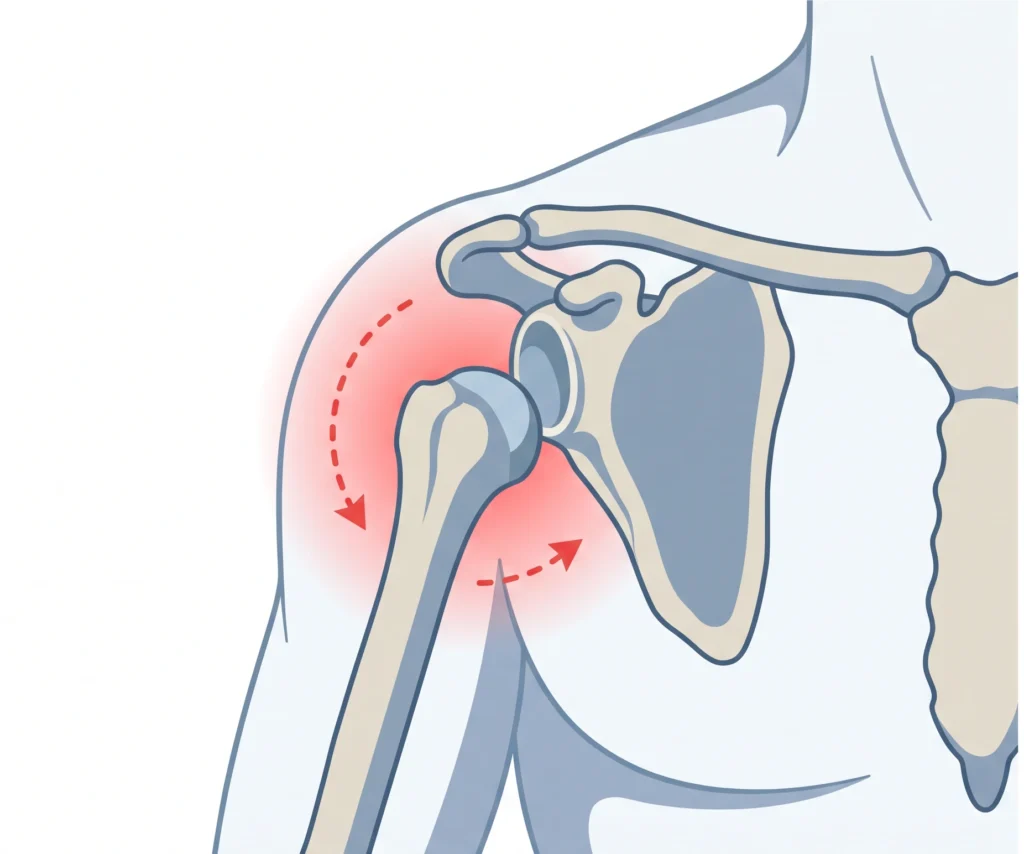
What Is a Shoulder Dislocation?

The shoulder is the most mobile joint in the body — and that mobility comes at the cost of stability. A dislocation (in Cantonese, commonly called 甩骹 occurs when the ball of the humerus is displaced from the glenoid socket. This can happen partially (subluxation) or completely (full dislocation).

There are three main types:

  • Anterior dislocation (≈95% of cases) — the humeral head shifts forward, usually from a fall on an outstretched arm or a blow while the arm is raised and rotated outward (common in basketball, rugby, and rock climbing).
  • Posterior dislocation — less common, often linked to seizures, electric shock, or a direct blow to the front of the shoulder.
  • Inferior dislocation — rare, where the arm is forced straight downward.

Common Causes

  • Falling onto an outstretched hand
  • Direct contact sports (rugby, basketball, martial arts)
  • Sudden forceful rotation of the arm
  • Repetitive overhead movement in swimmers, climbers, and volleyball players
  • Pre-existing joint hypermobility or a previous dislocation (the single biggest risk factor for recurrence)

Symptoms

  • Visibly deformed or “out of place” shoulder
  • Severe pain and inability to move the arm
  • Swelling and bruising around the joint
  • A sensation of the shoulder being loose, unstable, or “slipping”
  • Numbness or tingling down the arm (may indicate nerve involvement — seek urgent care)

*Seek immediate medical attention at a hospital or emergency department if you suspect a dislocation — the joint must be professionally relocated (“reduced”) by trained medical staff. Do not attempt to force it back into place yourself.
Diagnosis of Shoulder Dislocation

After emergency reduction, the hospital will typically arrange an X-ray to confirm the joint is correctly positioned and rule out fracture. In cases of recurrent instability or suspected soft-tissue (labrum, rotator cuff) damage, an MRI may be recommended. Your physiotherapist will then perform a detailed assessment of range of motion, strength, and joint stability to guide your rehabilitation plan.

Comprehensive Physiotherapy Treatment

Evidence-based rehabilitation is the single most important factor in preventing re-dislocation and returning to full function. A structured programme typically progresses through:

Phase 1 – Protect & Restore Motion

  • Week 0-2
  • Focus: Pain control, gentle passive range of motion, sling weaning.

Phase 2 – Rebuild Strength

  • Week 2-6
  • Focus: Rotator cuff and scapular stabiliser strengthening, active range of motion

Phase 3 – Dynamic Stability

  • Week 6-10
  • Focus: Proprioception training, closed-chain exercises, sport-specific loading

Phase 4 – Return to Activity

  • Week 10-12+
  • Focus: Progressive return to sport/work, movement-pattern retraining to reduce re-injury risk
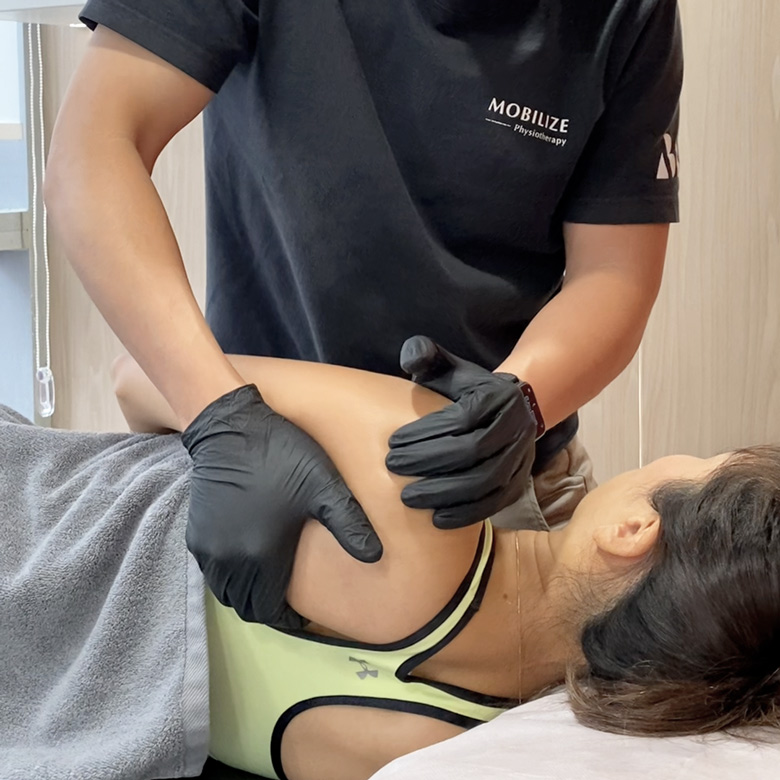
Physiotherapist treating a patient's shoulder

Why One-to-One Physiotherapy Matters?

Shoulder dislocation recovery isn’t linear, and a generic exercise sheet won’t address your specific instability pattern, sport demands, or occupational needs. At Mobilize Physio, every session is one-to-one with a dedicated physiotherapist who:

  • Conducts a full biomechanical and stability assessment
  • Designs a personalised, progressive loading programme
  • Uses hands-on manual therapy to manage pain and restore joint mechanics
  • Tracks objective strength and range-of-motion benchmarks before clearing return-to-sport
  • Provides ongoing injury-prevention coaching to reduce recurrence risk

When to See a Physiotherapist?

You should book a physiotherapy assessment as soon as your sling period begins — early guided movement significantly improves outcomes. Don't wait for pain to resolve completely; stiffness and muscle deconditioning set in quickly after immobilisation.

If you've experienced a shoulder dislocation — recent or recurring — our physiotherapists at MOBILIZE PHYSIO can build a personalised recovery plan to restore strength, confidence, and stability.

Frequently Asked Questions

Mild first-time dislocations often regain functional movement within 6–8 weeks with physiotherapy, though full strength and stability for sport can take 3–6 months.

Recurrence risk is highest in people under 25 (up to 50%) and decreases with age. Structured physiotherapy focused on rotator cuff and scapular strength meaningfully reduces this risk.

Many first-time dislocations, particularly in older adults, respond well to physiotherapy alone. Surgery is generally reserved for recurrent instability, significant structural damage, or high-demand athletes.

Yes — but exercise should be introduced progressively and guided by a physiotherapist. Returning to overhead or contact activity too early is the most common cause of re-dislocation.

A subluxation is a partial, often self-reducing displacement of the joint, while a full dislocation requires manual reduction by a medical professional. Both require physiotherapy rehabilitation.

Testimonials & Reviews

I came to them with chronic neck and knee issues, and they didn't just provide massage therapy. They took the time to thoroughly evaluate the source of my problems and develop a comprehensive treatment plan.
Through a combination of targeted hands-on therapy, customized strengthening exercises, and patient education, they helped me regain mobility and address the root causes of my pain. I learned the correct ways to strengthen the muscles and improve my posture to prevent future issues.
The staff is incredibly knowledgeable, taking the time to explain everything and ensure I understood how to continue my progress at home. Thanks to their expertise and dedication, I'm now pain-free and able to return to my regular activities without any limitations.
Arthur Liu
⭐ ⭐ ⭐ ⭐ ⭐
I had never been a believer in physio therapy in the past or that my experience with multiple chain medical physiotherapy center had brought me nothing but temporary improvements. Until I had came across mobilize physiotherapy where they take the extra mile to examine your situation and tailor a physiotherapy session. The physiotherapists at Mobilize not only identifies the root cause and provide massages for pain relievers but also to provide take home exercises for improvements. I was never rush out the door for the next session and they ensure that I had receive the right treatment before the session ends.
I would highly recommend this physiotherapy center.
Edmond Chan
⭐ ⭐ ⭐ ⭐ ⭐
As someone who regularly goes through the torment of backpain and neck pain, I was recommended by my friend to visit Mobilize Physiotherapy.
Everything - from appointment booking to the physiotherapy session itself - was very professional. Not only did Avery, my physiotherapist. give detailed explanations as he worked through my areas of pain, he taught me a few exercises that improve my core strength, which in turn could reduce my back and neck pain. Now, whenever I experience acute pain, I do these exercises and the pain eases away!
I highly recommend Mobilize Physiotherapy.
William Luk
⭐ ⭐ ⭐ ⭐ ⭐
Excellent service. The physiotherapists are very professional, easy to communicate with and also give clear instructions on some home exercises that can help ease my pain. As a stay at home mom, I need a lot of strength on my daily routine and whenever I have any pain and problems I go to Avery for therapies and he is always helpful and caring
Highly recommended!
Samantha Lee
⭐ ⭐ ⭐ ⭐ ⭐
I can't recommend my physio partner enough! They are always patient and provide valuable guidance to help me relieve chronic pain and improve my performance in jiu-jitsu. Their expertise has been invaluable to me. Highly recommended!
Felix Kung
⭐ ⭐ ⭐ ⭐ ⭐
passionate, precise and comprehensive physiotherapy service, highly recommended for sudden onset or prolonged pain with unknown reason.
Sam Sam
⭐ ⭐ ⭐ ⭐ ⭐

Book an Appointment

Get in touch with our physiotherapists