
MOBILIZE 物理治療中心

Common Conditions

Disc Herniation

Symptoms, Common Causes and Treatments

Understanding Disc Herniation

Disc herniation refers to a condition where the inner substance of the lumbar intervertebral disc (nucleus pulposus) is displaced outwards through the outer substance (anulus fibrosus). People often remember an event which precedes the onset of pain. While the most common cause of herniated disc is ageing due to degenerative changes at the nucleus pulposus. The second most common cause is trauma. Repetitive trunk bending and twisting with load, sedentary lifestyle, poor posture are found to be associated with disc herniations. Most cases of herniated disc occur within the age of 30-50, and about 95% of herniated discs occur in the lower lumbar region (e.g. L4/5, L5/S1).

Symptoms

Lumbar disc herniations can cause low back pain, and the pain may radiate down one side of the lower extremities for some instances due to peripheral nerve irritation by the herniated discs. In the more severe cases, the patient may even report numbness and weakness in the lower extremities.

  • Low back pain that may worsen with bending or twisting
  • Unilateral leg pain (sciatica‑like), tingling, burning, or pins‑and‑needles
  • Lower‑limb weakness or feelings of heaviness/instability
  • Directional preference: certain movements relieve symptoms; the opposite aggravates
  • Acute stage: trunk movements in multiple directions can provoke pain/numbness
  • Later stage: back bending (extension) is often better tolerated and may reduce disc pressure
  • Monitor neurological signs closely, especially new or worsening numbness and weakness.

Causes and Risk Factors

The causes of disc herniation include natural degeneration, improper posture and external trauma, as well as poor lifestyle habits. The following are the main contributing factors:

  1. Age‑related degeneration of the disc (most common cause)
  2. Trauma or sudden overload (e.g., heavy lifting with twist)
  3. Repetitive flexion/rotation with load; prolonged sitting
  4. Poor posture and low activity levels
  5. Suboptimal lumbopelvic control: weak core/hip muscles, limited thoracic mobility
  6. Previous episodes of low back pain

Why do some people develop herniated discs from the same movements while others do not?

It results from the interplay of three factors: structural vulnerability, load exposure, and motor control. When a disc is already degenerated, subjected to high-intensity or high-frequency loads, and lacks sufficient core and hip stability, the annulus fibrosus is more prone to microtears and fissures, ultimately leading to nucleus pulposus displacement.
Treatment

Most cases of disc herniations respond well to conservative treatment. However, the timeline of recovery could be affected by a range of factors such as age, general health, activity level and the history of previous episodes. Therefore, it is vital that rehabilitation is progressed timely and properly under the guidance of a health professional.

Acute Phase

Electrical Modalities

Most commonly used modalities for acute pain relief are interferential therapy, shockwave therapy and high energy inductive therapy

Manual Therapy

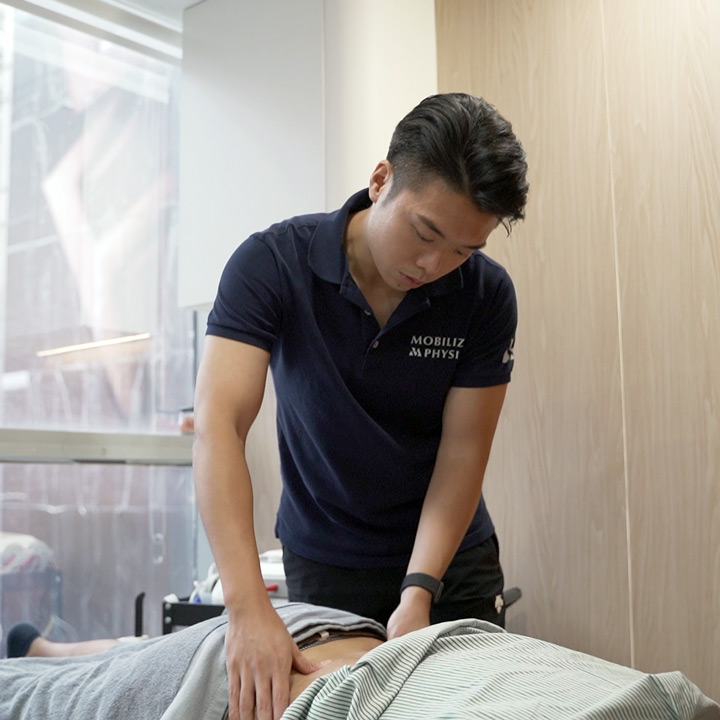
Gentle manual techniques such as low-grade joint mobilisation, manual traction and soft tissue massage on surrounding muscles are used to improve mobility

Exercise Therapy

Depending on the directional preference, specific mobility exercises will be given towards the preferred direction. If there are symptoms down in the legs, nerve gliding exercises will be prescribed.

Dry Needling

Trigger points in the lumbar and gluteal muscles are targeted to relieve the muscle spasms in the acute stage

Education

Our physiotherapist will explain the anatomy and the cause of the herniation, as well as providing tips on how to minimise pain and aid recovery in the early days

Later Stage

As the acute pain gradually subsides, the patient then enters into the next phase of treatment with a focus on daily activities and sports/occupational participation.

Postural Education

Maintaining a good posture is essential for spinal health when it comes to sitting, standing or lifting. Furthermore, the best posture is the next posture so frequent movement breaks are equally important

Functional Training

Depending on the occupational or recreational needs of the patient, the form and intensity of functional training might look different. If not done properly, the likelihood of another episode would be higher. Generally speaking, functional training would focus on strength, high level mobility, power and complex movement patterns

Continued Assessment

Disc herniation could also be a result caused by another dysfunctional region e.g. hip or thoracic spine. As the acute pain subsides, it is important that the surrounding regions have been assessed and cleared before discharging the patient

The ‘Scary’ Fact about Disc herniation

Disc herniation only accounts for 5% of cases of back pain, and 75% of symptomatic Disc herniations resolve in 6 months after the injury. In fact, a lot of Disc herniations are asymptomatic. Therefore, even if you have low back pain and the scan shows a herniated disc, it might not be the cause of your pain.

Frequently Asked Questions

Most do not. Conservative treatment (particularly physical therapy for Disc herniation) is often effective in alleviating pain and restoring function.

Yes, but it should be guided by a physical therapist. Avoid movements that trigger pain, and gradually reintroduce core and hip stability training.

  1. Loss of bowel or bladder control
  2. Saddle anesthesia (numbness in the groin area)
  3. Severe unsteadiness while walking
  4. Weakness or numbness in both lower limbs

Not necessarily. Clinical evaluation and symptom progression are more accurate in determining the actual cause of pain.

Referral

Although most cases of symptomatic disc herniations heal conservatively, those who fail conservative treatment or with more severe neural signs would need an orthopaedic opinion for possible injections, medications or surgery.

Testimonials & Reviews

As someone who regularly goes through the torment of backpain and neck pain, I was recommended by my friend to visit Mobilize Physiotherapy.

Everything -- from appointment booking to the physiotherapy session itself -- was very professional. Not only did Avery, my physiotherapist. give detailed explanations as he worked through my areas of pain, he taught me a few exercises that improve my core strength, which in turn could reduce my back and neck pain. Now, whenever I experience acute pain, I do these exercises and the pain eases away! I highly recommend Mobilize Physiotherapy.
William Luk
⭐ ⭐ ⭐ ⭐ ⭐
I had never been a believer in physio therapy in the past or that my experience with multiple chain medical physiotherapy center had brought me nothing but temporary improvements. Until I had came across mobilize physiotherapy where they take the extra mile to examine your situation and tailor a physiotherapy session. The physiotherapists at Mobilize not only identifies the root cause and provide massages for pain relievers but also to provide take home exercises for improvements. I was never rush out the door for the next session and they ensure that I had receive the right treatment before the session ends.
I would highly recommend this physiotherapy center.
Edmond Chan
⭐ ⭐ ⭐ ⭐ ⭐
Excellent service. The physiotherapists are very professional, easy to communicate with and also give clear instructions on some home exercises that can help ease my pain.

As a stay at home mom, I need a lot of strength on my daily routine and whenever I have any pain and problems I go to Avery for therapies and he is always helpful and caring Highly recommended!
Samantha Lee
⭐ ⭐ ⭐ ⭐ ⭐
Very professional therapy that doesn't only focus on passive treatment but also targets training of weak spots to improve overall performance and physiological sustainability.
Felix Lo
⭐ ⭐ ⭐ ⭐ ⭐
Will was very professional. He was very thorough with the assessment and suggested different exercises for me to improve my condition. Recommended 👍🏾
Keith So
⭐ ⭐ ⭐ ⭐ ⭐
Very caring and professional! Able to find out the root cause and provide effective treatment! Pain was much relieved! Highly Recommended!
Joanne Cheng
⭐ ⭐ ⭐ ⭐ ⭐

Book an Appointment

Get in touch with our physiotherapists