Common Conditions
Flat Feet
Types, Symptoms, Causes and Treatments
Understanding Flat Feet
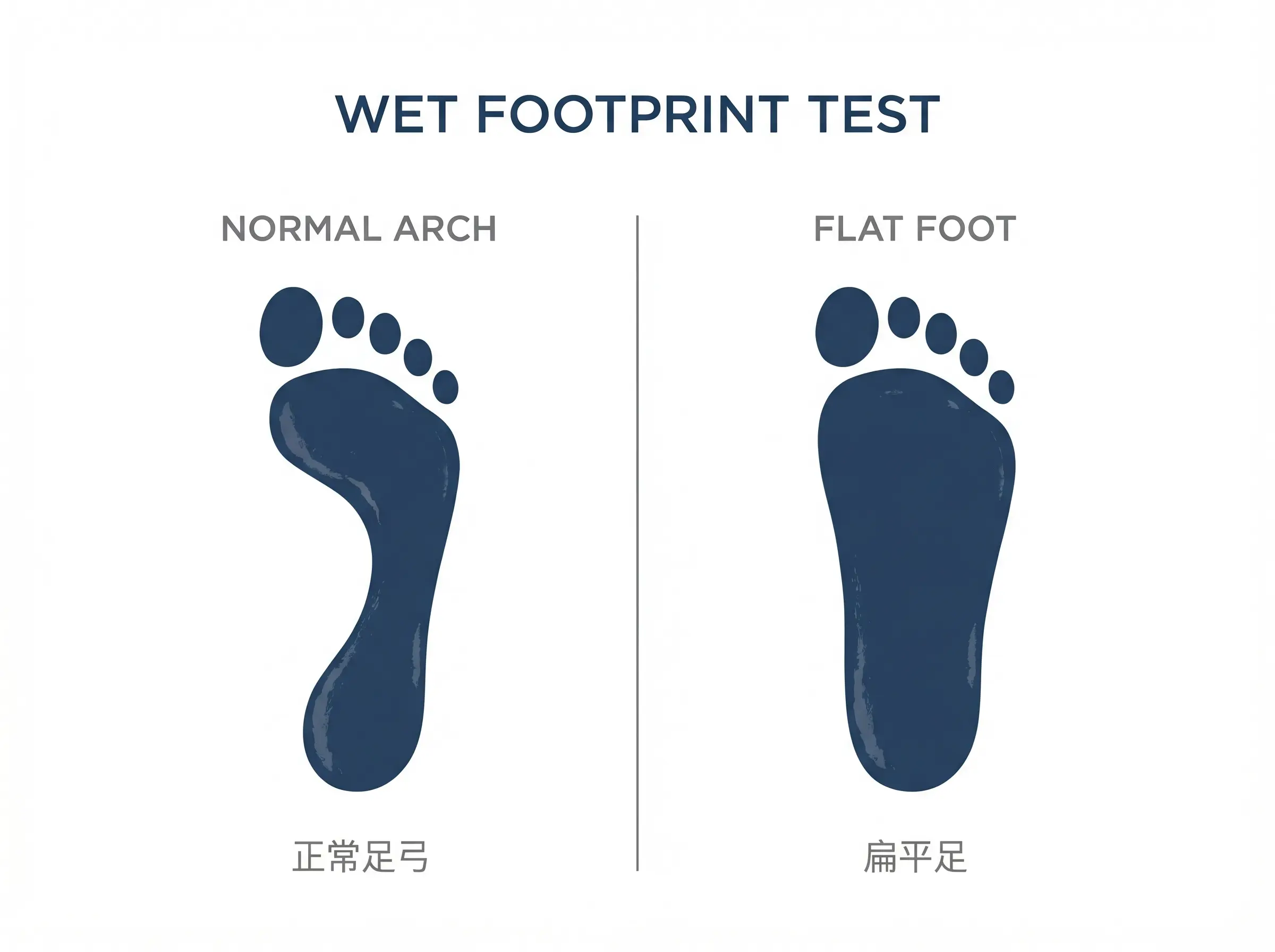
The arch of the foot acts as the body's natural "shock absorber." When we walk, run, or jump, it helps absorb the impact from the ground, preventing excessive stress on the feet and lower limbs. In a normal foot, the inner arch is slightly raised off the ground when standing, forming a bridge-like space.
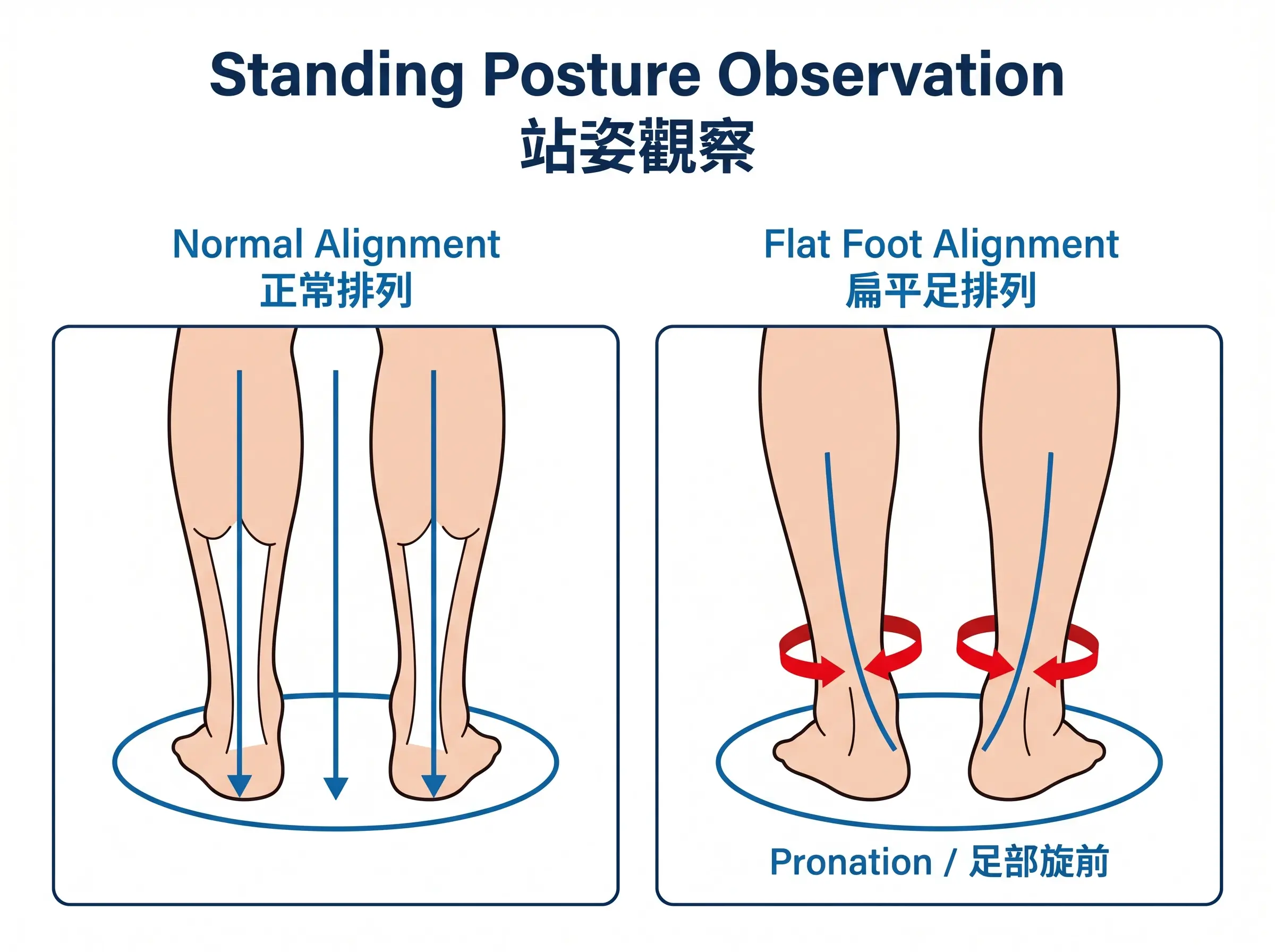
Flat feet (Pes Planus), also known as fallen arches, is a condition where the arch of the foot collapses or disappears entirely. When a person with flat feet stands, the entire sole of the foot touches the floor. Without the cushioning space of the arch, the foot cannot effectively absorb shock or support body weight. This not only increases the burden on the foot's joints and ligaments but can also trigger a chain reaction, causing uneven stress distribution in the knees, pelvis, and even the spine, leading to lower limb pain and restricted mobility. Although many people with flat feet do not experience obvious discomfort initially, long-term neglect can lead to more severe chronic pain conditions.
Types
Flat feet can be primarily divided into two categories:
- Congenital (Structural) Flat Feet: Often related to family genetics. Patients may be born with looser ligaments or experience tarsal coalition (abnormal fusion of foot bones) during development. In this type, the arch remains flat whether the foot is bearing weight or suspended in the air.
- Acquired (Functional) Flat Feet: Usually caused by acquired factors such as trauma, degeneration, or prolonged poor posture. Patients with this type may have a visible arch when the foot is not bearing weight, but the arch collapses as soon as they stand up.
Symptoms
- Foot pain, especially along the inner arch or heel area.
- Feet easily feeling fatigued, achy, or weak after prolonged standing or walking.
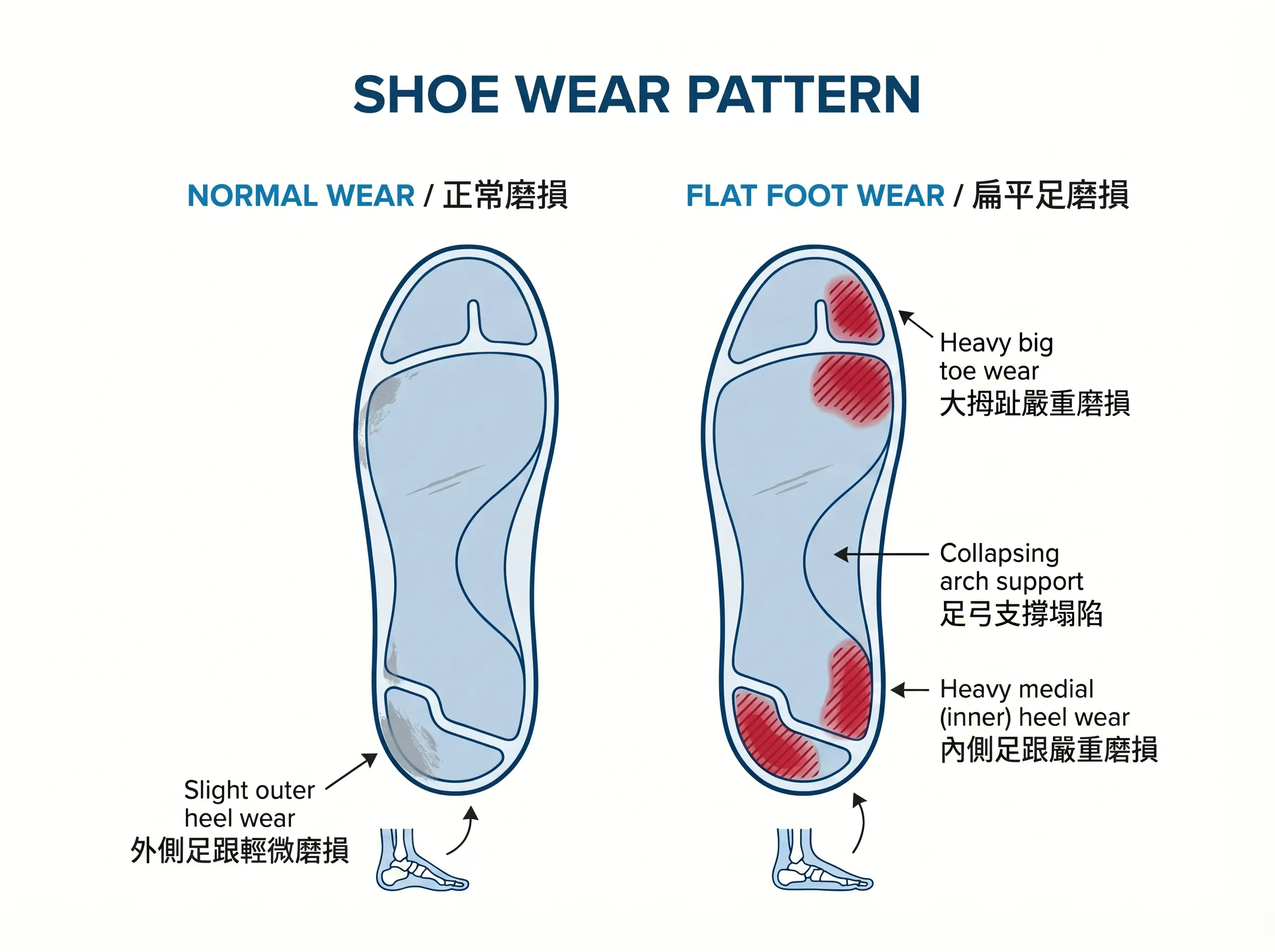
- Abnormal gait, often walking with toes pointing inward (pigeon-toed) or outward (duck-footed), with faster wear on the inner side of shoe heels.
- Poor balance, making one prone to falls or ankle sprains.
- If left untreated, it may lead to complications such as plantar fasciitis, bunions (hallux valgus), knee pain, lower back pain, or even scoliosis.
Common Causes
- Genetics and Congenital Factors: Family history, congenital ligament laxity, or abnormal foot bone development.
- Acquired Wear and Degeneration: As we age, foot muscles and ligaments (such as the posterior tibial tendon) gradually weaken and degenerate, failing to maintain arch height.
- Poor Habits and Posture: Prolonged wearing of unsupportive shoes or incorrect walking posture leads to uneven stress on foot muscles.
- Overweight/Obesity: Excess body weight significantly increases the load on the feet, accelerating arch collapse.
- Lack of Exercise: Insufficient physical activity leads to weakness in the foot and calf muscle groups, failing to provide adequate support.