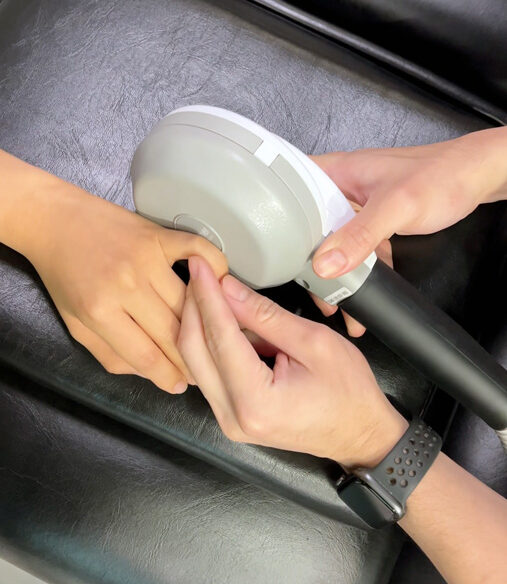
Common Conditions
Trigger Finger
Trigger Finger Symptoms, Common Causes and Treatments
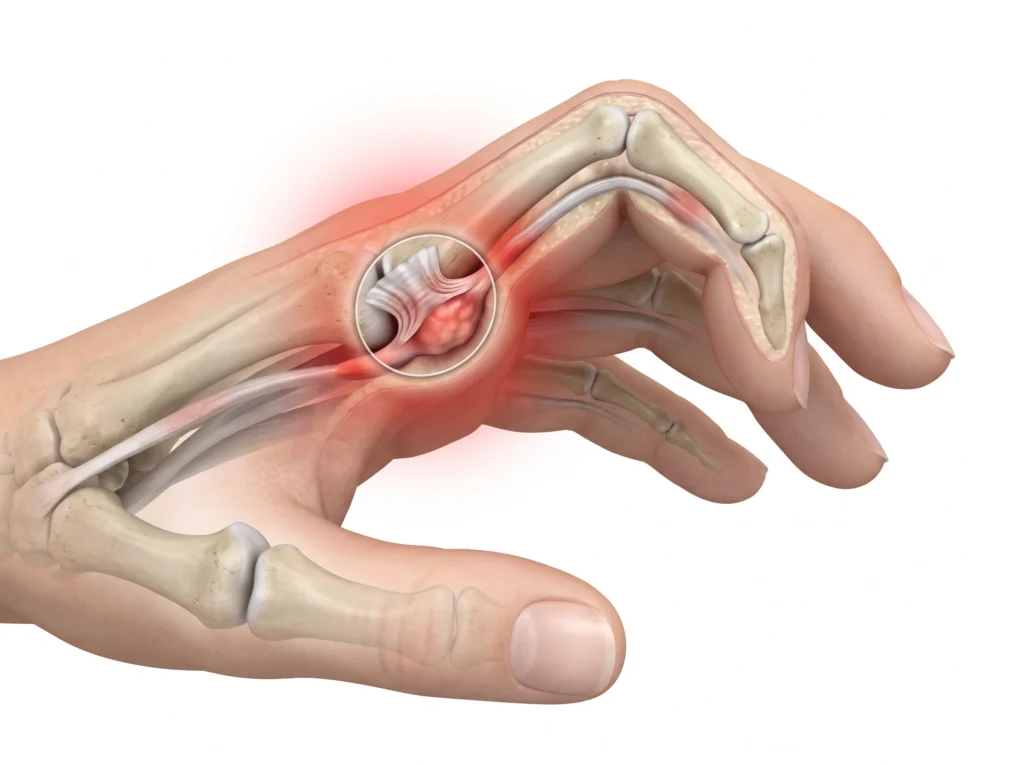
What is Trigger Finger?
Trigger finger, also known as stenosing tenosynovitis, is a condition that affects one or more flexor tendons of the hand and makes it difficult to bend the fingers or thumb. There are pulleys on each finger that allow finger tendons to pass through. Therefore the fingers can move freely in full range of extension and flexion. Trigger finger is thought to be the inflammation and thickening of the finger pulleys and the progressive inflammation of the tendon, and the tendon sheath may cause pain at the fingers and clicking during finger movement.
Trigger finger can affect any finger, but is most common in the thumb, middle finger, and ring finger, and can occur in one or multiple digits at once. The prevalence of trigger finger is around 2-3% in general population,with an even higher incidence (up to 10%) among individuals with diabetes. Repeated forceful contraction of finger flexion, for example when carrying heavy objects, prolonged writing or typing, rock climbing etc., are commonly associated with the development of trigger finger.
Common Causes
- Repetitive gripping or forceful hand movements (e.g. prolonged tool use, typing, playing musical instruments)
- Systemic conditions such as diabetes or rheumatoid arthritis, which increase risk
- Previous hand trauma or overuse
- Age — most common between 40 and 60 years old, and more frequent in women than men
- Occupations or hobbies involving frequent hand use (e.g. chefs, musicians, tradespeople)
Symptoms
- Pain or tenderness at the base of the finger, sometimes with a palpable nodule
- The finger catching in a bent position, requiring the other hand to help straighten it
- A clicking or popping sensation with finger movement
- Stiffness that is worse in the morning and improves slightly with activity
- In severe cases, the finger may lock completely in a bent position and cannot be straightened actively
*If the finger shows persistent swelling, redness, warmth, or severe pain, seek prompt medical attention to rule out infection or other acute conditions.