Common Conditions
Tennis Elbow (Lateral Epicondylitis)
Tennis Elbow Symptoms, Common Causes and Treatments
What is Tennis Elbow?
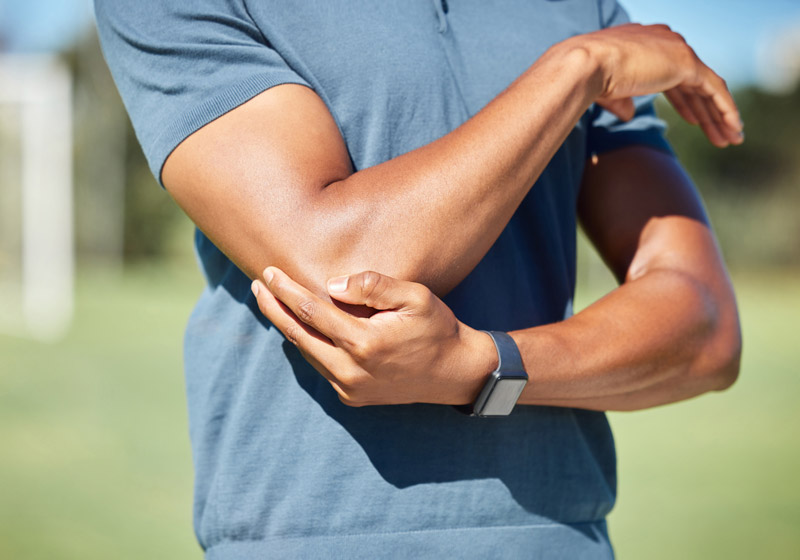
Tennis elbow is a painful condition over lateral elbow due to overuse or degeneration of the forearm muscles and tendons, especially the wrist and finger extensors.
Causes and Factors
- Overuse of forearm extensor muscle group: Common activities triggering tennis elbow are: prolonged computer work, racquet sports such as tennis, badminton, playing musical instrument, laboring work such as sewing or using a screwdriver, prolonged cooking, painting
- Aging: Natural degeneration process leads to weakening of forearm muscles and tendons
- Other risk factors: Smoking, Obesity
Symptoms of Tennis Elbow
The most common symptoms of tennis elbow include:
- Pain over the lateral elbow region during wrist movement, especially extension (moving the back of the hand upward)
- Radiating pain down the lateral forearm and fingers in severe cases
- Weakness in the affected wrist and hand grip, making it difficult to grasp objects, open jars, or twist a towel
Office Workers' Invisible Killer
The medical term for "tennis elbow" is lateral epicondylitis or lateral epicondylopathy. Despite having "tennis" in its name, the vast majority of patients in Hong Kong have actually never played the sport. It is an overuse injury or degenerative condition affecting the forearm extensor tendons.
For office workers, the following daily habits are the primary culprits behind tennis elbow:
- “Mouse Hand” (Computer Mouse Strain): Using a mouse for prolonged periods—especially with the wrist suspended in the air or gripping the mouse too tightly—keeps the forearm muscles in a state of chronic tension.
- Improper Keyboard Positioning: Keeping the wrists extended backward (bent upward) while typing increases stress on the tendons on the outside of the elbow.
- Lifting Heavy Objects with One Hand: Frequently carrying briefcases, laptop bags, or heavy stacks of documents with a single hand.
- Strain from Household Chores: Regularly wringing out towels, chopping ingredients, or holding a child (De Quervain’s tenosynovitis [“mommy elbow”] and tennis elbow frequently occur together).