

In Hong Kong, whether you are a weekend “hiking enthusiast” on the trails, a competitive long-distance runner, or a commuter rushing for the bus, an ankle sprain (commonly known as “rolling your ankle”) is one of the most frequent sports injuries.
Unfortunately, many people underestimate the complexity of this injury, mistakenly believing that once the swelling subsides and the pain fades, they are fully healed. In reality, an ankle sprain involves structural damage to ligament fibers and a disruption of the neuromuscular control system. Without systematic physiotherapy intervention, up to 40% of patients fall into a cycle of Chronic Ankle Instability (CAI), leading to premature joint degeneration.
In this blog post, we dive deep into the pathology of ankle sprains, their root causes, clinical diagnostic standards, home-based rehabilitation exercises, and how professional physiotherapy can accelerate tissue repair. Our goal is to help patients understand their injury from a pathological perspective and rebuild ankle stability at a functional level.
Table Of Content
Ankle Pathophysiology: The Microscopic Impact of Ligament Damage
The stability of the ankle joint relies heavily on its static stabilizers: the ligament complex.
The Vulnerability of Lateral Ligaments
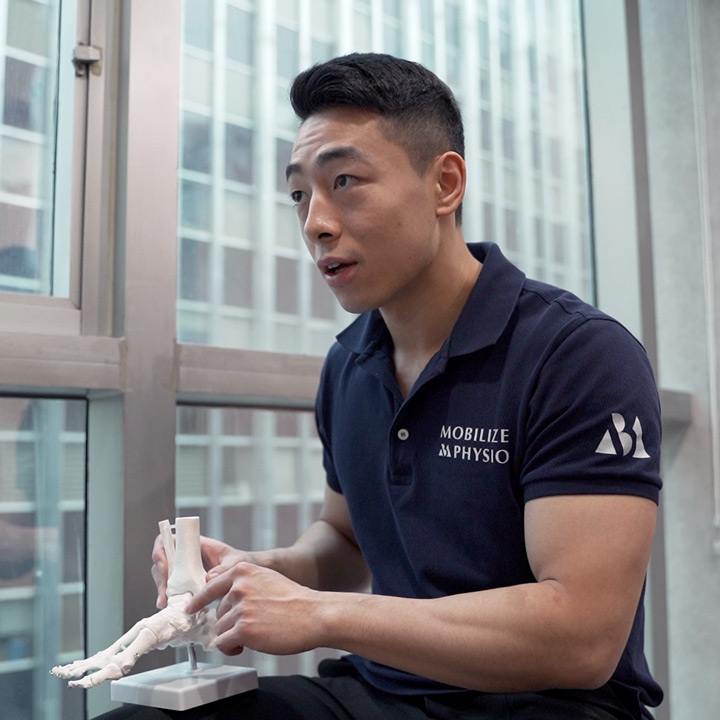
Anatomically, the lateral (outer) side of the ankle is supported by three primary ligaments: the Anterior Talofibular Ligament (ATFL), the Calcaneofibular Ligament (CFL), and the Posterior Talofibular Ligament (PTFL). The majority of sprains occur when the foot is in a “Plantarflexion” (pointed down) and “Inversion” (turned inward) position. In this state, the ATFL bears the most stress and is the most susceptible to tearing.
Loss of Proprioception
Ligaments are rich in nerve endings responsible for sending joint position signals to the brain (known as proprioception). When a ligament tears, these sensors are damaged simultaneously. Even if the ligament heals on the surface, without functional training to rebuild neural pathways, the brain’s ability to micro-adjust the joint significantly decreases. This is why patients often feel “weakness” in the ankle or experience recurrent sprains.
Signs and Symptoms of an Ankle Sprain
Symptoms usually manifest instantly or within 1–2 hours of the injury. Recognizing these signs helps evaluate the severity of the damage.
- Pain and Abnormal Sounds: Sharp pain around the ankle is the most obvious symptom. If you hear a clear “popping” sound at the moment of injury, it often indicates a severe tear or total rupture, requiring immediate professional assessment.
- Swelling and Ecchymosis (Bruising): Swelling localized to the joint is common in mild-to-moderate injuries. However, if swelling spreads to the calf or foot, it reflects more extensive soft tissue damage. Deep bruising/skin discoloration is a key indicator of internal bleeding from torn blood vessels.
- Functional Impairment: Patients will experience a limited range of motion and limping. Severe cases will feel a sense of “instability,” where the ankle feels like it might “give way” under weight.
- Red Flags: If you notice deformity, a “grating” bone sensation, or if the foot feels numb and cold, seek emergency medical attention immediately as these may indicate a fracture or nerve/vascular damage.
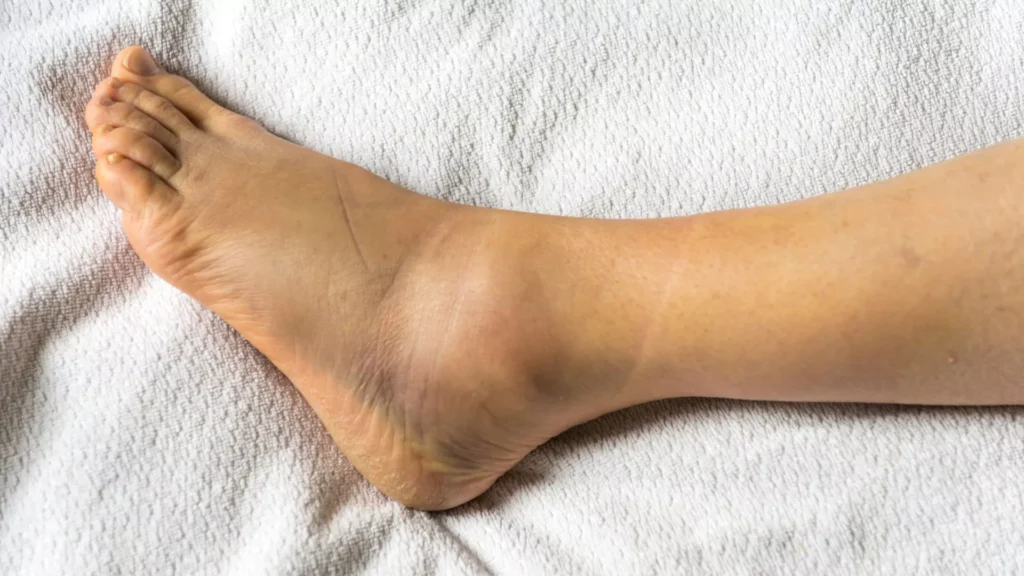
Clinical Diagnostic Grades
Physiotherapists categorize sprains into three grades based on the structural integrity of the ligaments:
- Grade 1 (Mild): Ligament fibers are stretched but not torn. Minimal swelling and tenderness; patients can usually still bear weight.
- Grade 2 (Moderate): Partial ligament tear. Symptoms include significant bruising, sharp pain, and mild joint laxity during stress tests.
- Grade 3 (Severe): Complete ligament rupture. Severe swelling, total loss of function, and inability to bear any weight. This requires precise clinical testing (such as the Anterior Drawer Test) to determine if immobilization or imaging is necessary.
Classifying Ankle Sprains: Beyond the Lateral Tear
Not all ankle rolls are the same. Understanding the specific type is crucial for effective treatment:
- Medial Ankle Sprain: Relatively rare; caused by excessive “eversion” (turning the foot outward), damaging the strong Deltoid Ligament.
- High Ankle Sprain (Syndesmosis Injury): Occurs when the foot is forced into external rotation while dorsiflexed (toes up). This damages the ligaments connecting the tibia and fibula, severely impacting joint stability and requiring a much longer recovery time.
Home Rehabilitation: Key Exercises for Stability
Once acute pain subsides, progressive exercise is the cornerstone of functional recovery.
1. Intrinsic Foot Muscle Activation: Towel Scrunches
- Mechanism: Sit in a chair with your foot flat on a towel. Use your toes to scrunch the towel toward you, then push it back.
- Value: This activates the small muscles of the foot to share the load that the damaged ligaments used to carry. Add a weight (like a soup can) to the end of the towel for a greater challenge. Repeat 8–12 times.
2. Calf Power Reconstruction: Calf Raises
- Details: Keep your core tight and body upright.
- Beginner: Double-leg raises.
- Advanced: Single-leg raises to train eccentric control.
- Clinical Note: Keep the knee straight. If you cannot maintain stability, revert to double-leg raises to avoid compensation.
3. Dynamic Balance: Tiptoe Tandem Walking
- Requirement: Walk in a straight line on your tiptoes, placing one foot directly in front of the other (heel-to-toe).
- Professional Progression: Hold a water bag (Aqua Bag). The shifting liquid creates unpredictable center-of-gravity changes, forcing the peroneal muscles to perform rapid, precise contractions to rebuild neural feedback.
4. Lateral Stability: Ankle Eversion Isometrics
- Execution: Sit with your foot flat and the outer side pressed against a wall. Push your foot outward against the wall without actually moving the joint.
- Frequency: Hold for 6 seconds, repeat 8–12 times. This strengthens the peroneal muscles without stressing the healing ligaments.
Professional intervention provides a roadmap for healing at different stages:
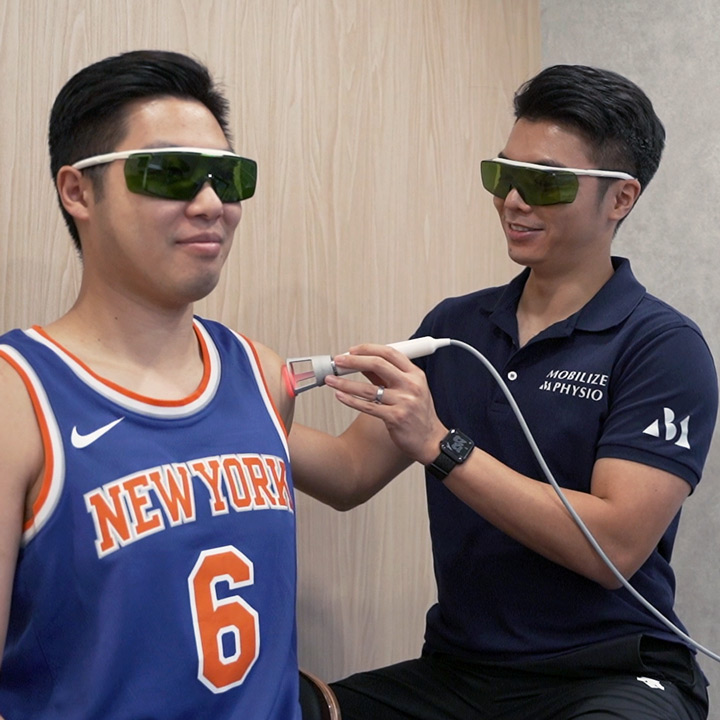
- Acute Management: Using Ultrasound, Interferential Therapy (IFT), and High-Energy Electromagnetic therapy to control inflammation. Dry needling may be used to relieve muscle spasms.
- Manual Therapy: Joint mobilization to prevent stiffness and manual release of the soleus, gastrocnemius, and plantar muscles to promote mobility.
- Late-Stage Rehab: Focusing on proprioceptive training, specific strength conditioning, and professional Sports Taping to support the joint during a return to sport.
Expert Advice: Ice or Heat?
1. Acute Phase (First 48–72 Hours): Cryotherapy (Ice)
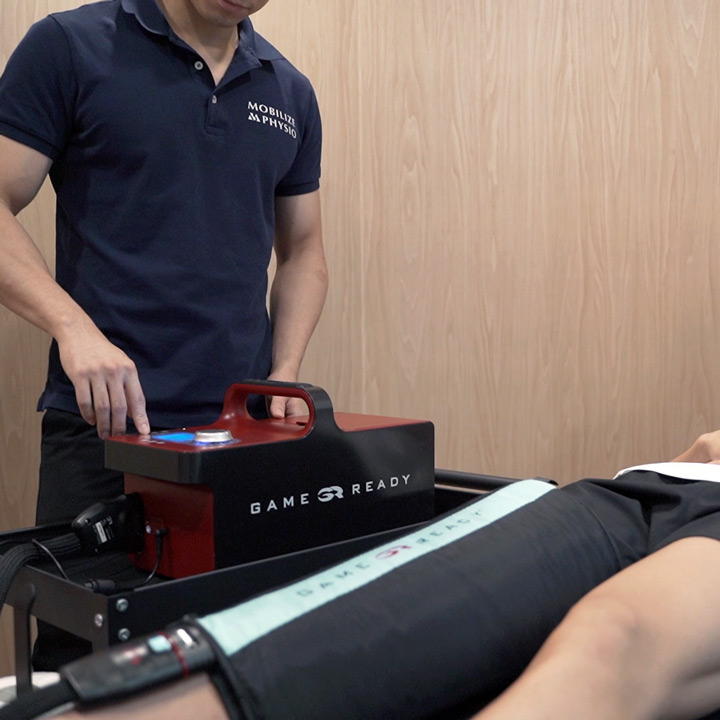
- Physiological Mechanism: Ice causes vasoconstriction, reducing internal bleeding and edema (swelling). It also slows nerve conduction to provide natural pain relief.
- Guidelines: 10–15 minutes per session. Always wrap the ice pack in a towel to prevent frostbite.
2. Chronic or Late Recovery Phase: Thermotherapy (Heat)
- Physiological Mechanism: Heat causes vasodilation, increasing blood circulation to bring oxygen and nutrients for repair. It also increases tissue elasticity to reduce stiffness.
- Guidelines: 15–20 minutes. Use before stretching or rehab exercises for best results.
3. Modern Standards: From RICE to PEACE & LOVE
We now use the more comprehensive PEACE & LOVE framework:
- PEACE (Acute): Protection, Elevation, Avoid Anti-inflammatories, Compression, Education.
- LOVE (Recovery): Load (progressive), Optimism, Vascularization, Exercise.
Conclusion
An ankle sprain is not just a soft tissue injury; it is a reconstruction of the coordination between nerves, muscles, and joints. At Mobilize Physio, our goal is to build a stronger defense system for your ankle. Through precise biomechanical analysis, advanced equipment, and targeted functional training, we help you regain 100% control over your movement.
Whether you are returning to a high-intensity race or simply want to enjoy a pain-free daily life, we are here to walk with you every step of the way.



Physiotherapy Service
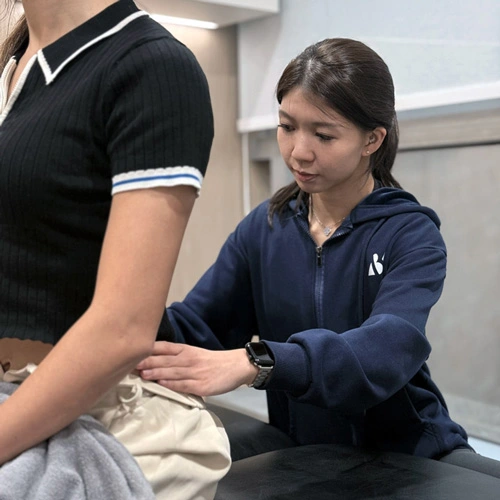
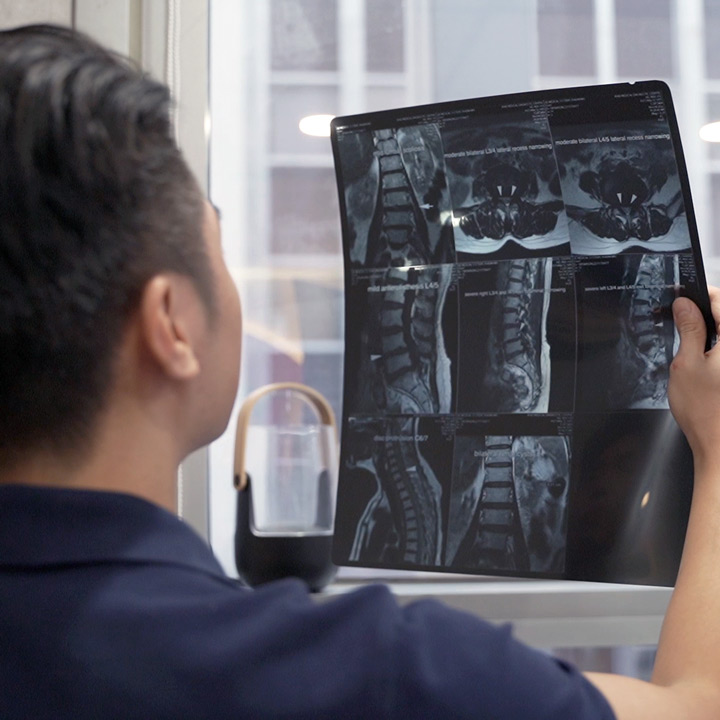
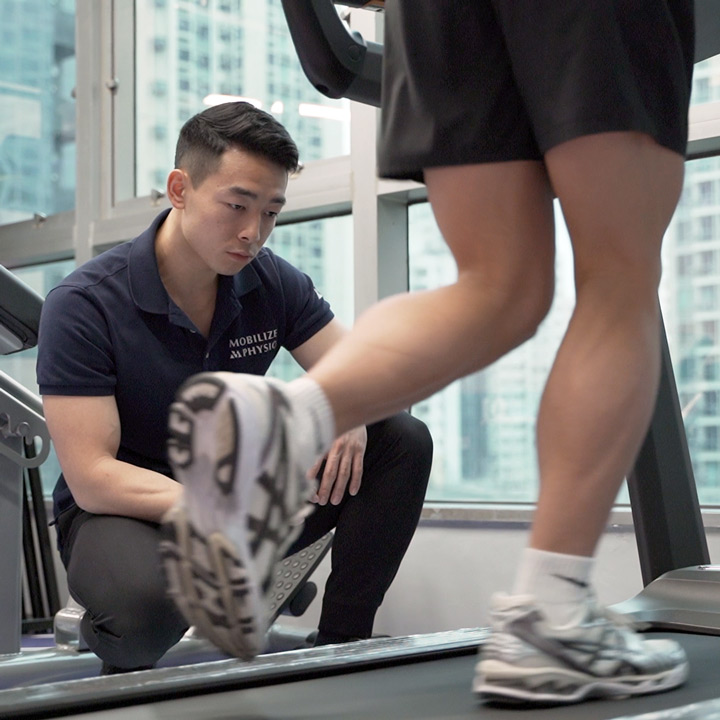
Mobilize Physio is a physiotherapy center located in Hong Kong. Our team of professional physiotherapists provides high-quality, evidence-based pain treatment. Our services include sports injury treatment, pain management, post-surgery rehabilitation, and posture and body alignment correction.
Every patient is unique, and we believe that every treatment plan should be customized accordingly. Therefore, we focus on one-on-one service to ensure that each patient receives personalized attention and specialized care. Contact us today to learn more about our physiotherapy services.
Latest Blog Posts

5 Exercises to Strengthen Your Hidden Core | The Gold Standard: Why Physiotherapy is the First Line of Defence for Women’s Pelvic Health

Say Goodbye to the “Slouch”: A Guide to Understanding and Fixing Rounded Shoulders
The Road to Recovery: Understanding Whiplash and Early Intervention
The Science of Precision Recovery: How Force Plate Technology is Transforming Physiotherapy

Waking Up Dizzy? Understanding BPPV vs. Cervicogenic Dizziness: A Comprehensive Guide to Diagnosis and Recovery

How to Heal a Sprained Ankle: 4 Best Rehab Exercises to Prevent Re-injury