

Whether you spend all day in front of a computer or texting during your MTR ride home, you’ve likely noticed your shoulders curving forward. You’re not alone; “rounded shoulders” (sometimes colloquially referred to as “mom shoulders”) is one of the most frequent postural issues we see in our Hong Kong clinic.
While it might start as a cosmetic concern, leaving it unaddressed can lead to chronic pain and reduced mobility. The good news? It is highly correctable.
Table Of Content
Understanding Rounded Shoulders: The Anatomy of the "Slump"
To truly understand rounded shoulders, we have to look at the scapulothoracic joint—the way your shoulder blades (scapula) interact with your mid-back (thorax).
In a neutral, healthy posture, your shoulder blades should sit flat against your rib cage, roughly three inches away from your spine. When you develop rounded shoulders, your body undergoes a structural shift known as Upper Crossed Syndrome.
The Anatomy of the Shift
Think of your shoulders as being controlled by a system of pulleys. When this system is out of balance, several things happen simultaneously:
- Scapular Protraction: The shoulder blades slide forward and away from the spine. Instead of acting as a stable anchor for arm movement, they “wing” outward, making the upper back appear wider and more curved.
- Internal Rotation of the Humerus: As the scapula moves forward, the upper arm bone (humerus) rotates inward. This is why, when you look in the mirror, your palms might face backward rather than toward your thighs.
- The “Forward Head” Connection: The body is a kinetic chain. As the shoulders round, the upper back (thoracic spine) increases its curve. To keep your eyes level with the horizon, your neck compensates by jutting forward. This places immense pressure on the cervical spine, often making the head feel much heavier than its actual weight.
Why It Becomes "Locked"
Over time, this isn’t just a bad habit—it becomes a structural change. The muscles at the front of your body (the Pectoralis Minor and Subscapularis) actually shorten and become “hypertonic” or chronically tight. Meanwhile, the muscles that hold your shoulders back (the Rhomboids and Middle Trapezius) become overstretched and weak.
Eventually, the connective tissue (fascia) surrounding these muscles thickens in this slumped position, making it feel physically difficult or even exhausting to “just sit up straight” for more than a few seconds.

Why is This Happening? (Risk Factors)
Most cases of rounded shoulders are “postural,” meaning they develop from repetitive daily habits.
- The “Tech Neck” Lifestyle: Looking down at smartphones or tablets for extended periods.
- Office Ergonomics: Working at a desk that isn’t properly adjusted, causing you to lean into the screen.
- Prolonged Sitting: Whether driving long distances or sitting in meetings, gravity eventually pulls the chest forward.
Muscle Imbalances: This is the most common physical cause. It usually involves a “tug-of-war” where the chest muscles (pectorals) are too tight, and the back muscles—specifically the Rhomboids, Serratus Anterior, and Lower Trapezius—are too weak to pull the shoulders back.
The Hidden Impact: More Than Just Back Pain
Physically, rounded shoulders often manifest as:
- Aches & Stiffness: Persistent tightness in the upper back, neck, and shoulders.
- Reduced Range of Motion: Difficulty lifting arms overhead or reaching behind your back.
- Tension Headaches: Caused by the forward-head posture straining the base of the skull.
Beyond the physical, posture significantly impacts self-esteem. Slumping can make you feel less confident and fatigued, whereas an upright, neutral posture is linked to higher energy levels and a more assertive presence.
Leveling Up Your Posture: Advanced Self-Tests and Actionable Steps
Identifying the root of the “slouch” is the first step toward fixing it. Here is a deeper look at how to assess your alignment and the specific strategies you can implement today to reverse the curve.
Advanced Self-Diagnosis: Beyond the Mirror
If the basic checks left you unsure, these three tests offer a more clinical look at your shoulder mobility and muscle tightness.
- The Floor Pec Test: Lie flat on your back on the floor with your knees bent and feet flat. Extend your arms out to the sides like the letter “T” with your palms facing up. If your shoulders or elbows lift off the floor, or if you feel a “pulling” sensation in your chest, your pectoral muscles are likely too tight, dragging your shoulders forward.
- The Doorway Lean: Stand in a doorway and place your forearms on the doorframe with your elbows at shoulder height (forming a 90-degree angle). Gently step forward with one foot. If you feel immediate, sharp tension in the front of your shoulder rather than a deep muscle stretch, your joint capsule may be restricted.
- The Scapular “Wall Slide” Check: Stand with your back against a wall, arms in a “goalpost” position (elbows and wrists touching the wall). Try to slide your arms up toward the ceiling without your lower back arching or your wrists leaving the wall. If you can’t keep contact, your serratus anterior and lower trapezius aren’t engaging properly to stabilize your shoulder blades.
What Can You Do About It? (The Three-Pillar Approach)
Correcting rounded shoulders requires more than just willpower; it requires a balance of releasing, strengthening, and re-aligning.
1. Release the "Pullers" (The Front)
Since the chest muscles are pulling you forward, you must manually “reset” them.
- Lacrosse Ball Release: Place a firm ball between your chest (near the armpit) and a wall. Lean your weight into it and move slowly to find tender spots. Hold for 30 seconds to allow the fascia to release.
- The Open Book Stretch: Lie on your side with knees tucked. Reach your top arm over to the other side, following it with your eyes. This opens the thoracic spine and the chest simultaneously.
2. Activate the "Anchors" (The Back)
You need to wake up the muscles that have become “lazy” from being overstretched.
- Prone “Y-W-T” Raises: Lying face down on the floor, lift your arms into the shape of a Y, then a W, then a T, squeezing your shoulder blades together at the bottom of the movement.
- Band Pull-Aparts: Hold a resistance band in front of you and pull it apart until it touches your chest, focusing on moving the shoulder blades toward the spine rather than just using your arms.
3. Environmental Re-Alignment
If you don’t change your environment, your body will eventually return to the slump.
- The “MTR” Rule: When on your phone during a commute, bring the phone up to eye level rather than dropping your chin to your chest.
- Lumbar Support: Use a small roll or cushion in the small of your back while sitting. Supporting the lower curve of the spine naturally makes it easier for the upper shoulders to stay back.
- Micro-Breaks: Set a timer for every 45 minutes of desk work to perform three deep “shoulder rolls” and a 10-second chest stretch.
By combining these self-tests with a consistent routine, you can begin to reshape your posture. However, if you experience numbness in your arms or persistent “pinching” in the shoulder joint, it is best to consult a professional to ensure your mechanics are being corrected safely.
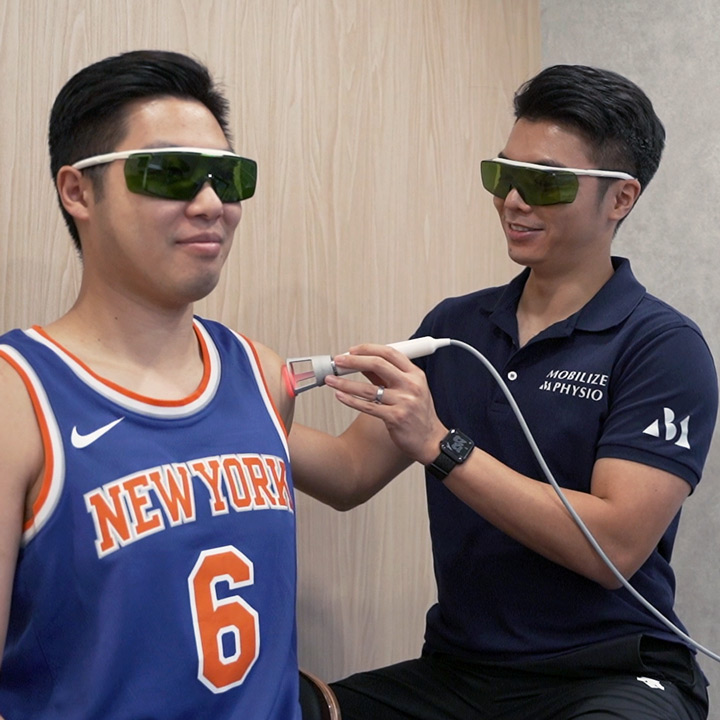
While DIY stretches are a great start, a physical therapist provides a structured recovery path:
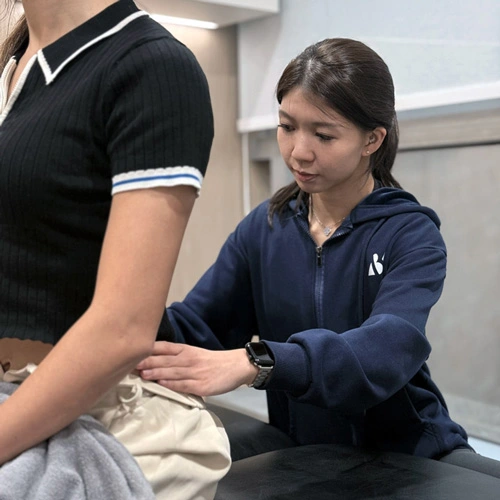
- Manual Therapy: We use soft tissue mobilization to release deep-seated tension in the chest and neck that you can’t reach alone.
- Postural Re-education: We identify your specific muscle “firing” patterns and teach your nervous system how to hold a neutral spine effortlessly.
- Personalized Periodization: We create a progressive exercise plan to ensure your muscles don’t just get stronger, but stay balanced for the long term.
Conclusion
Rounded shoulders might feel like a permanent side effect of a modern, desk-bound lifestyle, but they don’t have to be your “new normal.” By understanding the anatomy of the slouch and identifying the muscle imbalances at play, you’ve already taken the first step toward a healthier, more confident alignment.
Consistency is the secret to lasting change. Incorporating small ergonomic adjustments and targeted movements into your daily routine—whether it’s during your commute or a quick break at the office—will yield significant results over time.
Don’t Wait for the Pain to Become Chronic If you find that self-stretching isn’t enough, or if you are dealing with persistent stiffness and “pinching” sensations, professional intervention can make all the difference. At our Hong Kong clinic, we specialize in helping individuals break free from postural strain through personalized assessment and evidence-based physiotherapy.



Physiotherapy Service
Mobilize Physio is a physiotherapy center located in Hong Kong. Our team of professional physiotherapists provides high-quality, evidence-based pain treatment. Our services include sports injury treatment, pain management, post-surgery rehabilitation, and posture and body alignment correction.
Every patient is unique, and we believe that every treatment plan should be customized accordingly. Therefore, we focus on one-on-one service to ensure that each patient receives personalized attention and specialized care. Contact us today to learn more about our physiotherapy services.
Latest Blog Posts
5 Exercises to Strengthen Your Hidden Core | The Gold Standard: Why Physiotherapy is the First Line of Defence for Women’s Pelvic Health

Say Goodbye to the “Slouch”: A Guide to Understanding and Fixing Rounded Shoulders
The Road to Recovery: Understanding Whiplash and Early Intervention
The Science of Precision Recovery: How Force Plate Technology is Transforming Physiotherapy

Waking Up Dizzy? Understanding BPPV vs. Cervicogenic Dizziness: A Comprehensive Guide to Diagnosis and Recovery

How to Heal a Sprained Ankle: 4 Best Rehab Exercises to Prevent Re-injury