Common Conditions
Forward Head Posture
Symptoms, Common Cause and Treatments

Understanding Forward Head Posture
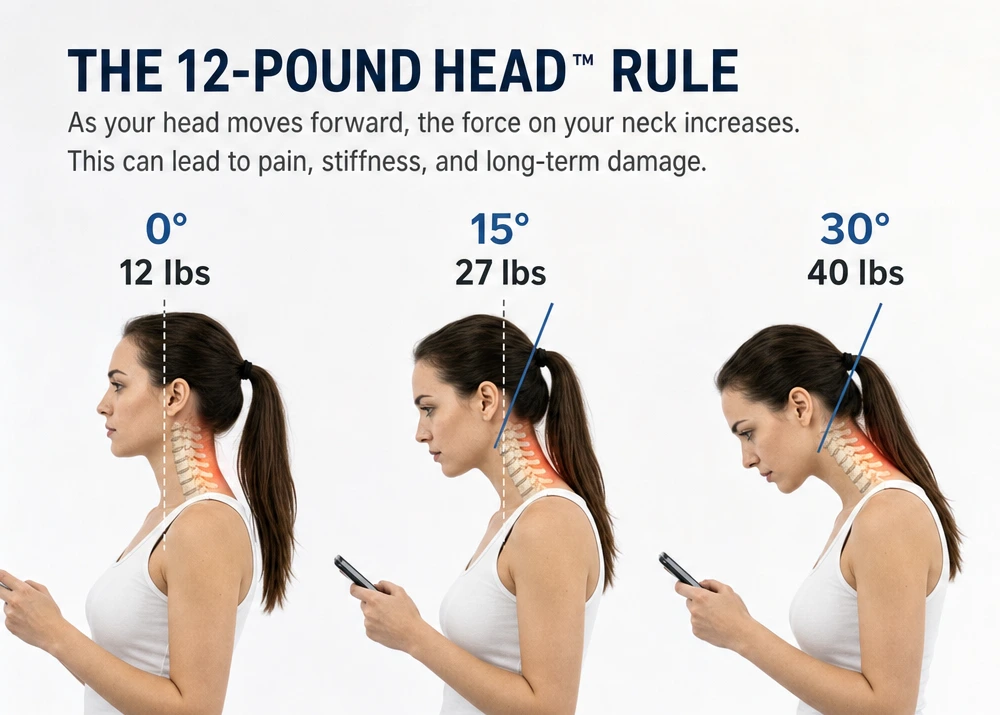
Forward Head Posture (FHP), commonly known as "烏龜頸" (Turtle Neck) in Chinese or "Tech Neck," is a prevalent postural deviation characterized by the head protruding forward relative to the shoulders, with the chin jutting out, an overextended cervical spine, and often accompanied by thoracic kyphosis (hunchback) in the upper back. From a side view, the neck appears to crane forward like a turtle, hence its colloquial name. This posture is increasingly common in modern society, especially among individuals who spend prolonged periods using electronic devices (e.g., smartphones, computers).
From a biomechanical perspective, when the head is in a forward position, the neck muscles bear significantly more stress than in a neutral posture. For every inch the head moves forward, the cervical spine experiences an additional load of approximately 10 pounds. Over time, this leads to chronic tightness and shortening of the posterior neck muscles (e.g., upper trapezius, levator scapulae) while the deep cervical flexors in the front of the neck become lengthened and weakened. This muscular imbalance not only affects the normal physiological curve of the cervical spine but can also compress nerves and blood vessels, triggering a cascade of pain and functional impairments.
Symptoms of Forward Head Posture
Beyond its impact on appearance, Forward Head Posture can be accompanied by the following symptoms:
Neck, Shoulder, & Back Pain: Chronic muscle strain causing stiffness, soreness, and pain between the shoulder blades.
Headaches & Dizziness: Tight muscles can compress nerves to cause tension headaches (back of head/temples) or cause dizziness from reduced circulation.
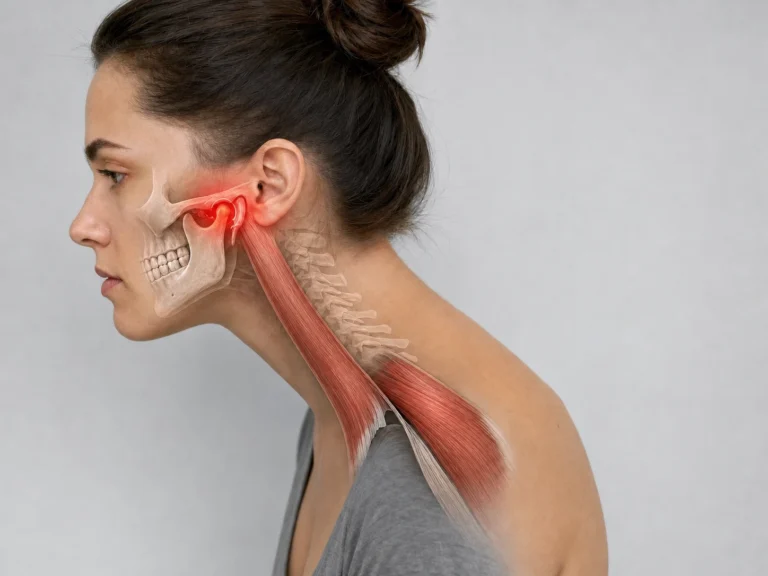
Jaw & TMJ Issues: Forward head posture shifts the jaw, leading to bite misalignment, TMJ pressure, jaw pain, or clicking.
Arm Numbness or Weakness: Pinched nerves in the neck can cause tingling, numbness, or weakness radiating down the arms and fingers.
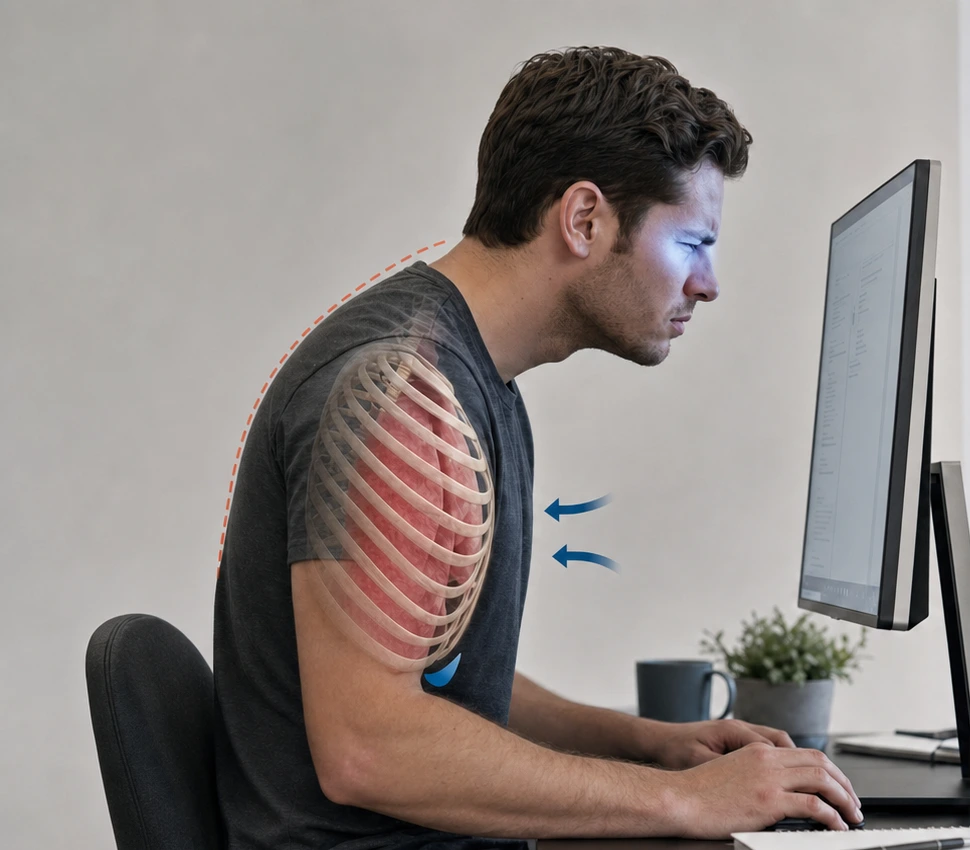
Breathing Difficulties: A compressed chest and rib cage restrict the diaphragm, leading to shallow breathing and lower oxygen intake.
Emotional and Sleep Disturbances: Chronic pain and poor posture can affect sleep quality, leading to low mood, anxiety, or difficulty concentrating.
Common Causes of Forward Head Posture
FHP typically results from a combination of factors, with poor postural habits being the primary cause:
Electronic Device Use: Looking down at screens puts the neck in prolonged flexion, causing muscle imbalances.
Poor Work Posture: Desk jobs or precision work (e.g., dentists, jewelers) without proper ergonomics.
Weak Core & Back Muscles: Lack of exercise leaves the spine without enough structural support, leading to slouching.
Poor Sleeping Posture: Pillows that are too high/low or sleeping on your stomach strains the cervical spine.
Vision Problems: Unconsciously leaning the head forward to see screens or text more clearly.
Psychological Stress: Chronic stress causes people to unconsciously shrug their shoulders and crane their necks.