MOBILIZE 物理治療中心

Common Conditions

Flat Feet

Types, Symptoms, Causes and Treatments
Understanding Flat Feet

The arch of the foot acts as the body's natural "shock absorber." When we walk, run, or jump, it helps absorb the impact from the ground, preventing excessive stress on the feet and lower limbs. In a normal foot, the inner arch is slightly raised off the ground when standing, forming a bridge-like space.

Flat feet (Pes Planus), also known as fallen arches, is a condition where the arch of the foot collapses or disappears entirely. When a person with flat feet stands, the entire sole of the foot touches the floor. Without the cushioning space of the arch, the foot cannot effectively absorb shock or support body weight. This not only increases the burden on the foot's joints and ligaments but can also trigger a chain reaction, causing uneven stress distribution in the knees, pelvis, and even the spine, leading to lower limb pain and restricted mobility. Although many people with flat feet do not experience obvious discomfort initially, long-term neglect can lead to more severe chronic pain conditions.

Types

Flat feet can be primarily divided into two categories:

  • Congenital (Structural) Flat Feet: Often related to family genetics. Patients may be born with looser ligaments or experience tarsal coalition (abnormal fusion of foot bones) during development. In this type, the arch remains flat whether the foot is bearing weight or suspended in the air.
  • Acquired (Functional) Flat Feet: Usually caused by acquired factors such as trauma, degeneration, or prolonged poor posture. Patients with this type may have a visible arch when the foot is not bearing weight, but the arch collapses as soon as they stand up.

Symptoms

  • Foot pain, especially along the inner arch or heel area.
  • Feet easily feeling fatigued, achy, or weak after prolonged standing or walking.
  • Abnormal gait, often walking with toes pointing inward (pigeon-toed) or outward (duck-footed), with faster wear on the inner side of shoe heels.
  • Poor balance, making one prone to falls or ankle sprains.
  • If left untreated, it may lead to complications such as plantar fasciitis, bunions (hallux valgus), knee pain, lower back pain, or even scoliosis.

Common Causes

  • Genetics and Congenital Factors: Family history, congenital ligament laxity, or abnormal foot bone development.
  • Acquired Wear and Degeneration: As we age, foot muscles and ligaments (such as the posterior tibial tendon) gradually weaken and degenerate, failing to maintain arch height.
  • Poor Habits and Posture: Prolonged wearing of unsupportive shoes or incorrect walking posture leads to uneven stress on foot muscles.
  • Overweight/Obesity: Excess body weight significantly increases the load on the feet, accelerating arch collapse.
  • Lack of Exercise: Insufficient physical activity leads to weakness in the foot and calf muscle groups, failing to provide adequate support.
How to Tell if You Have Flat Feet? 3 Simple Self-Diagnosis Methods

Many people may have flat feet without realizing it, only seeking answers when they start experiencing foot or knee pain. In fact, through a few simple home tests, you can get an initial assessment of your arch health. If you suspect that you or a family member might have flat feet, try these three common self-diagnosis methods.

The Wet Footprint Test

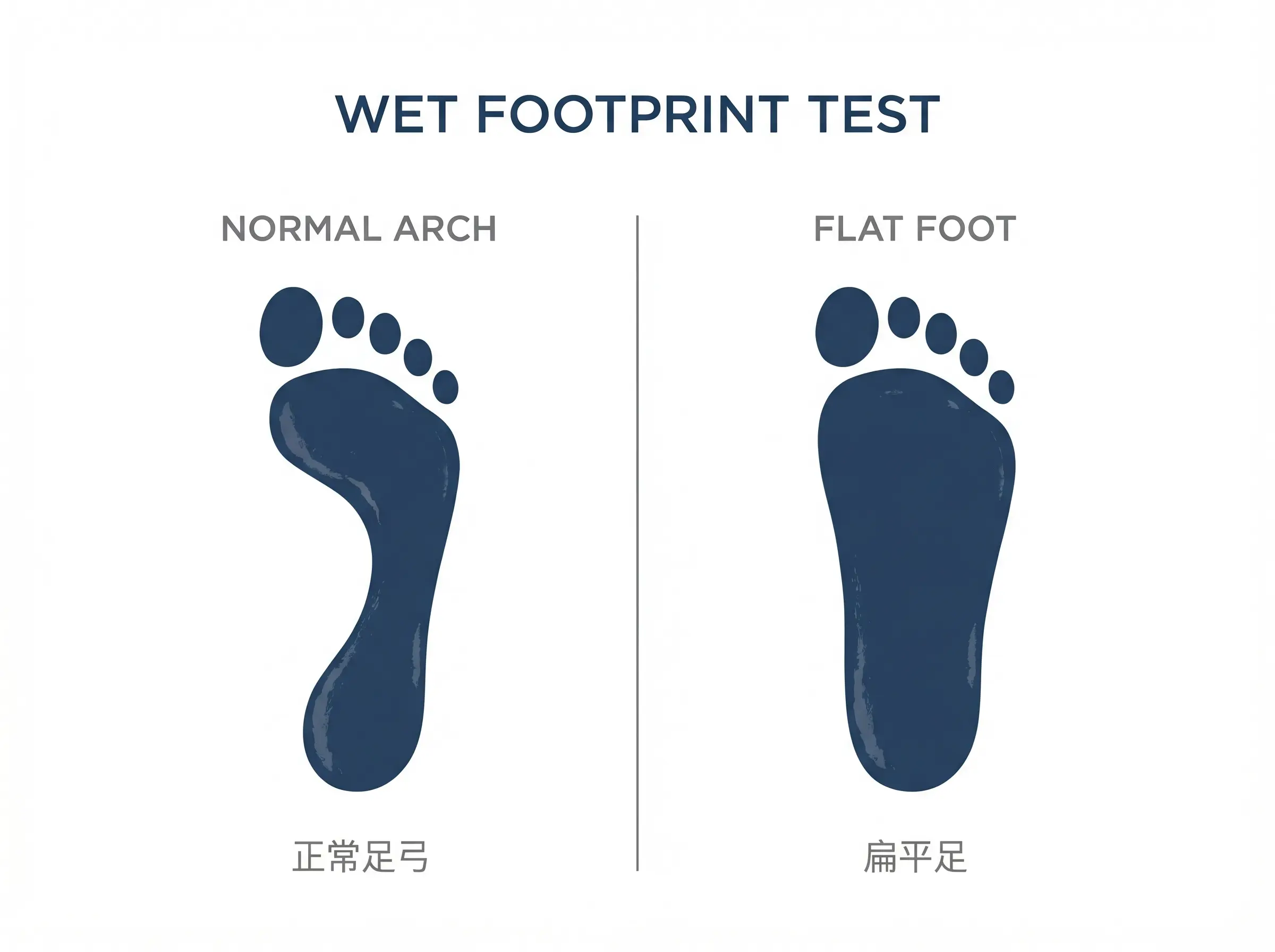
This is the easiest test to perform at home. First, place a blank piece of heavy paper or newspaper flat on the ground. Next, slightly wet the soles of both feet and step naturally onto the paper in your normal standing posture. Observe the shape of the water footprint left behind: if there is a distinct curve or gap on the inner side of the footprint (resembling a crescent moon), your arch height is normal. However, if the entire outline of the sole is almost completely printed on the paper with no obvious inner indentation, this is a typical characteristic of flat feet.

Observing Shoe Wear Patterns

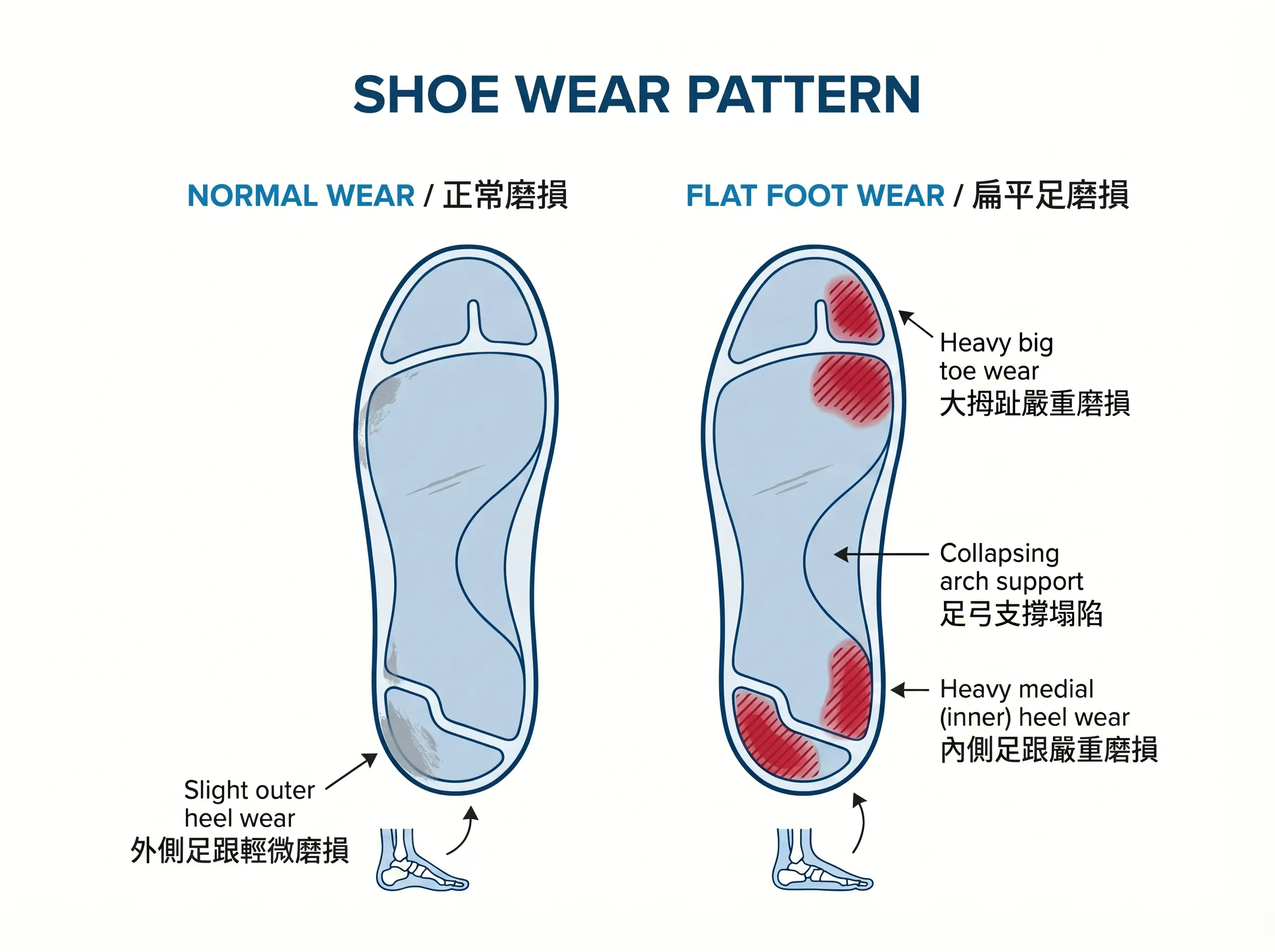
The shoes we wear daily often record the secrets of how our feet bear weight. Take out a pair of flat shoes or sneakers that you wear frequently and have owned for a few months, turn them over, and examine the wear pattern on the soles. Under normal circumstances, the wear should be relatively even or slightly concentrated on the outer edge of the heel. However, because the arches of individuals with flat feet collapse, their center of gravity tilts excessively inward while walking (foot overpronation). This causes particularly severe wear on the "inner side" of the sole and the "inner edge of the heel."

Standing Posture and Ankle Eversion Observation

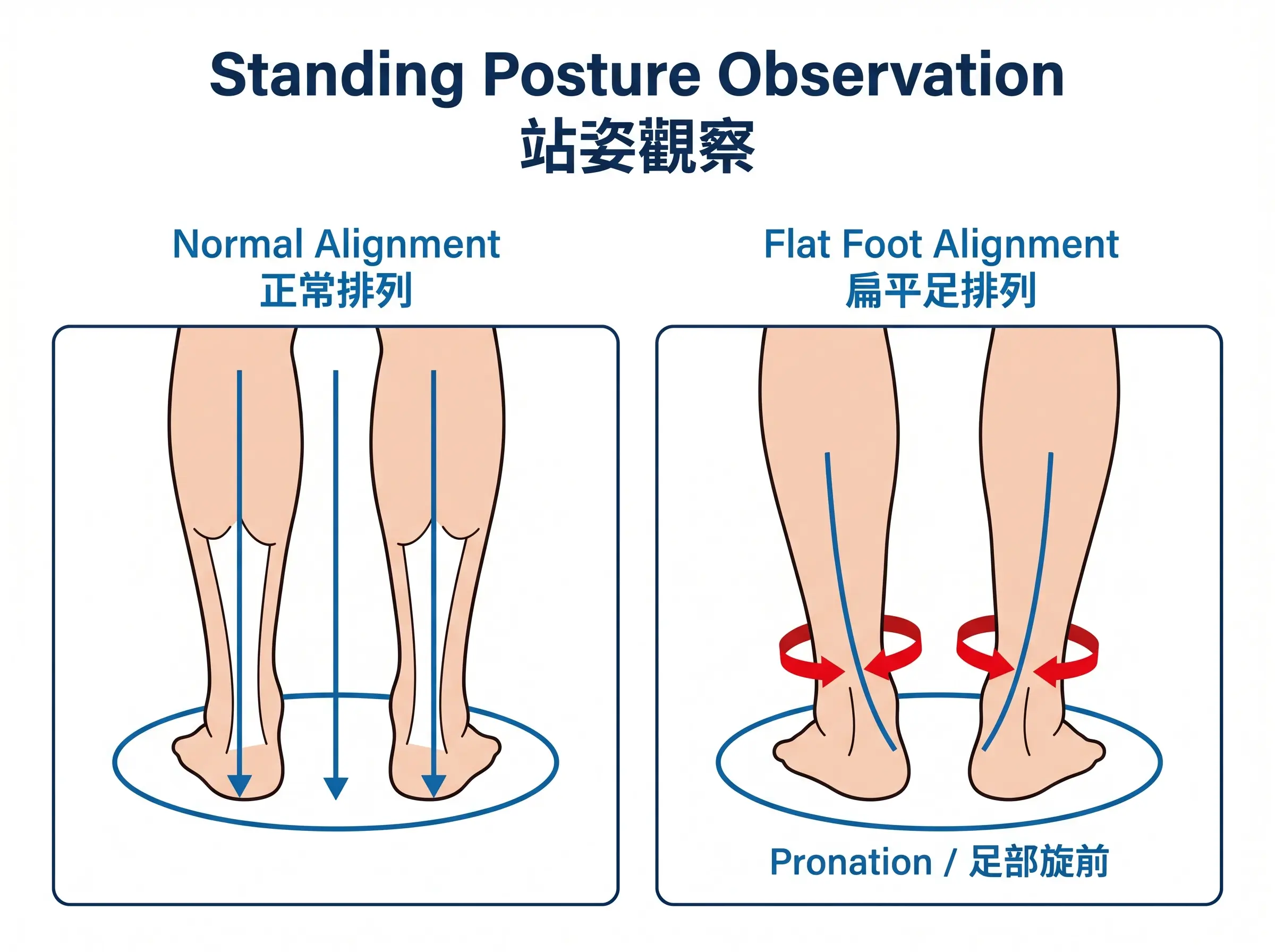
Stand naturally barefoot and ask a family member or friend to observe the alignment of your ankles and calves from directly behind you. In a normal standing posture, the midline of the calf and the heel should form a relatively straight line. But for individuals with flat feet, because the inner arch loses its supportive strength, body weight forces the ankle to collapse inward. Viewed from behind, the inner side of the ankle will protrude noticeably, and the heel will tilt outward, creating what is known as "heel eversion" or valgus.

Physiotherapy Treatment Approach

Physiotherapy plays a crucial role in improving flat feet symptoms, strengthening foot structures, and preventing complications. A physiotherapist will design a personalized treatment plan based on the patient's specific condition:

  • Manual Therapy: Therapists utilize joint mobilization and soft tissue massage to relax tight calf muscles and plantar fascia, correcting minor foot and ankle misalignments to improve mobility and reduce pain.
  • Exercise Therapy: This core treatment involves targeted strengthening (e.g., heel raises, toe towel scrunches for posterior calf, tibialis posterior, and intrinsic foot muscles) and stretching exercises (for Achilles tendon and calf muscles) to enhance arch support and reduce tension. Proprioceptive training also improves foot balance and gait.
  • Electrotherapy / Modalities: For acute inflammation or severe pain, modalities like ultrasound, interferential current (IFC), or focused shockwave therapy are employed to promote blood circulation, accelerate tissue repair, and provide anti-inflammatory and pain relief effects.
  • Acupuncture / Dry Needling: This technique targets specific acupoints or trigger points in the foot and calf to relax deep muscle fascia, stimulate pain-relieving substances, and alleviate soreness.
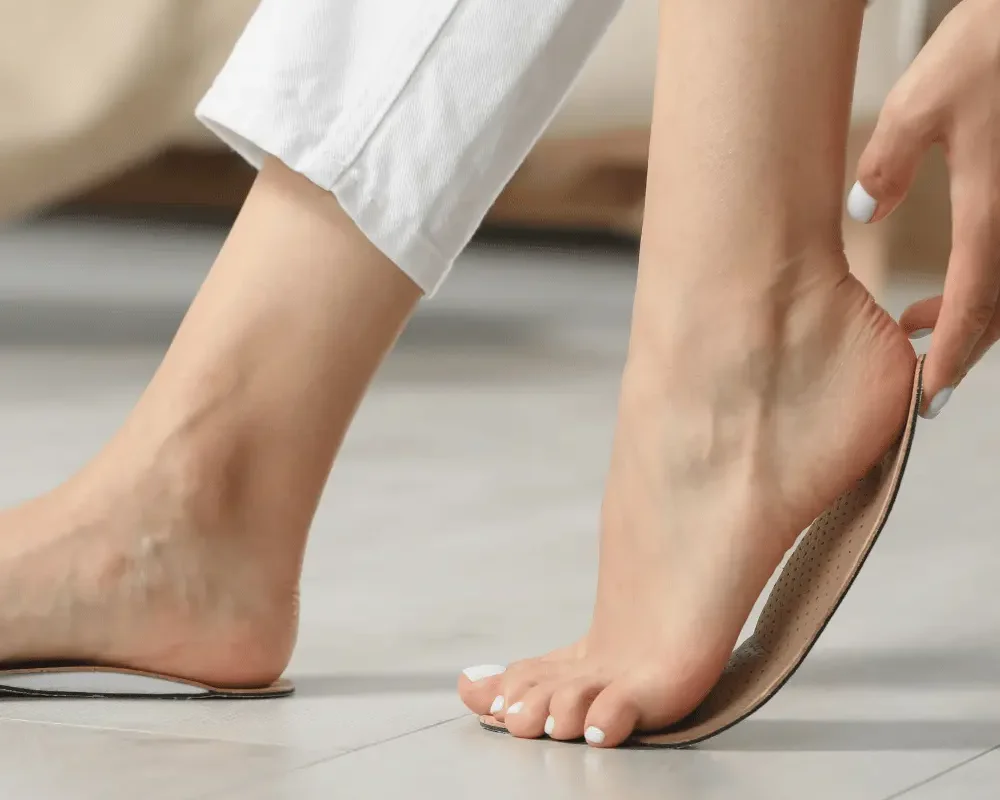
  • Orthotics and Footwear Advice: Physiotherapists assess foot biomechanics to recommend custom orthotic insoles, which provide passive arch support, redistribute plantar pressure, and improve lower limb alignment, thereby reducing joint burden and preventing symptom progression.

Frequently Asked Questions

For structural flat feet in adults, the bone structure is already set, making it very difficult to restore the arch to a normal height through non-surgical methods. However, physiotherapy can effectively strengthen foot muscles, improve gait, and eliminate pain. Through exercise training and wearing appropriate orthotics, patients can fully regain normal mobility and live pain-free.

Many infants and toddlers have physiological flat feet during early development, which usually improves naturally between ages 6 and 10 as foot muscles and arches develop. However, if the child frequently complains of foot pain while walking, falls easily, or if the arch hasn’t developed by school age, it is recommended to seek a professional assessment from a physiotherapist early on to avoid affecting normal lower limb bone development.

  1. Yes, people with flat feet can exercise, but they need to progress gradually and take protective measures. Because the foot’s shock-absorbing ability is compromised, it’s advisable to choose suitable stability running shoes or use orthotic insoles. Before starting high-intensity workouts, one should first strengthen the foot and calf muscles through physiotherapy. If persistent pain occurs after exercise, stop and consult a professional.

No. Flat feet alter the biomechanical alignment of the lower limbs. Even if your feet don’t hurt currently, long-term uneven stress can lead to pressure on the inner knees, anterior pelvic tilt, or uneven lumbar spine loading, triggering a chain reaction of knee and lower back pain. Therefore, if you notice flat feet accompanied by an abnormal gait or easy fatigue, early intervention can prevent future joint wear and tear.

Individuals with flat feet should avoid shoes with soles that are too flat, too soft, or lack support (like flats or canvas shoes). It is recommended to choose shoes with a firm heel counter, a sole with some thickness and good shock absorption, and an inner shoe design that provides arch support. In severe cases, it is best to use custom-made orthotic insoles under the guidance of a physiotherapist.

Testimonials & Reviews

As someone who regularly goes through the torment of backpain and neck pain, I was recommended by my friend to visit Mobilize Physiotherapy.

Everything -- from appointment booking to the physiotherapy session itself -- was very professional. Not only did Avery, my physiotherapist. give detailed explanations as he worked through my areas of pain, he taught me a few exercises that improve my core strength, which in turn could reduce my back and neck pain. Now, whenever I experience acute pain, I do these exercises and the pain eases away! I highly recommend Mobilize Physiotherapy.
William Luk
⭐ ⭐ ⭐ ⭐ ⭐
I had never been a believer in physio therapy in the past or that my experience with multiple chain medical physiotherapy center had brought me nothing but temporary improvements. Until I had came across mobilize physiotherapy where they take the extra mile to examine your situation and tailor a physiotherapy session. The physiotherapists at Mobilize not only identifies the root cause and provide massages for pain relievers but also to provide take home exercises for improvements. I was never rush out the door for the next session and they ensure that I had receive the right treatment before the session ends.
I would highly recommend this physiotherapy center.
Edmond Chan
⭐ ⭐ ⭐ ⭐ ⭐
Excellent service. The physiotherapists are very professional, easy to communicate with and also give clear instructions on some home exercises that can help ease my pain.

As a stay at home mom, I need a lot of strength on my daily routine and whenever I have any pain and problems I go to Avery for therapies and he is always helpful and caring Highly recommended!
Samantha Lee
⭐ ⭐ ⭐ ⭐ ⭐
Very professional therapy that doesn't only focus on passive treatment but also targets training of weak spots to improve overall performance and physiological sustainability.
Felix Lo
⭐ ⭐ ⭐ ⭐ ⭐
Will was very professional. He was very thorough with the assessment and suggested different exercises for me to improve my condition. Recommended 👍🏾
Keith So
⭐ ⭐ ⭐ ⭐ ⭐
Very caring and professional! Able to find out the root cause and provide effective treatment! Pain was much relieved! Highly Recommended!
Joanne Cheng
⭐ ⭐ ⭐ ⭐ ⭐

Book an Appointment

Get in touch with our physiotherapists