As London hosts its iconic Wimbledon tournament, tennis fever is in the air! Whether you’re watching the pros battle it out or hitting the courts more often yourself this summer, one thing is clear — tennis season is here. But with more court time comes more strain on your body.
Tennis is a dynamic, high-impact sport that requires explosive strength, agility, endurance, and quick reaction times. From powerful serves to rapid lateral movements, these physical demands can put athletes — recreational and competitive alike — at risk of injury.
At our physiotherapy clinic in Hong Kong, we understand the unique challenges tennis players face. This blog will explore how physiotherapy can help optimize your tennis performance, prevent injuries, and support safe return to play.
Table Of Content
Why Are Tennis Players Prone to Injury?
Tennis involves repetitive motions and rapid changes in direction, which can result in overuse and acute injuries — especially if you play often or ramp up your training quickly. The upper limbs bear the brunt of repetitive strokes, while the lower limbs are constantly challenged with high-speed sprints and pivots.
Tennis elbow is an overuse injury involving the extensor carpi radialis brevis (ECRB) tendon where it inserts at the lateral epicondyle of the humerus (outer elbow). It is commonly caused by repetitive wrist extension and gripping during backhand strokes. Players often feel pain and tenderness along the outer elbow, with symptoms worsening when lifting objects, shaking hands, or turning doorknobs.
Strengthening Exercises:
Wrist curls and reverse wrist curls
Eccentric wrist extension exercises
Grip strength training with soft ball squeezes
Warm-Ups & Stretches:
Forearm extensor stretches (wrist flexion stretch with straight elbow)
Gentle wrist and elbow mobilizations
Other Tips:
Ensure your racquet grip size and string tension are appropriate
Use a softer grip and avoid over-gripping the racquet
The rotator cuff consists of four muscles — supraspinatus, infraspinatus, teres minor, and subscapularis — that stabilize the shoulder joint. Repetitive overhead actions, like serving and smashing, can cause inflammation or strain, especially if there’s poor scapular control. Symptoms include pain lifting the arm overhead, weakness, or clicking sensations in the shoulder.
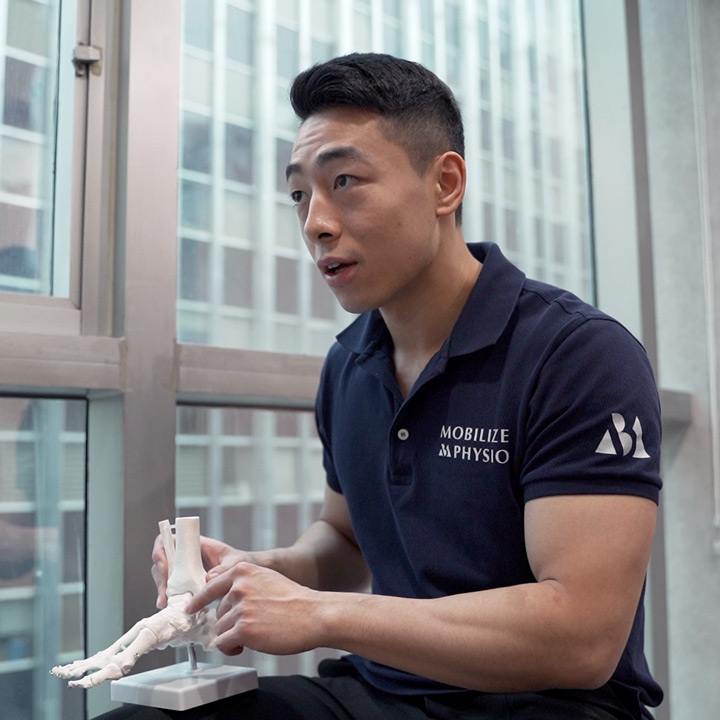
The most common tennis ankle injury is a lateral ankle sprain, involving overstretch or tear of the anterior talofibular ligament (ATFL). This typically results from rapid lateral movements or landing awkwardly during volleys or returns. Symptoms include swelling, bruising, and a sense of instability on the outside of the ankle.
Strengthening Exercises:
Resistance band ankle inversion/eversion
Calf raises
Peroneal muscle strengthening
Warm-Ups & Stretches:
Dynamic ankle circles and hops
Calf and Achilles tendon stretches
Other Tips:
Practice balance exercises (e.g., single-leg stance, wobble board drills)
Wear supportive footwear with lateral stability
Consider ankle taping if you have a history of sprains
This condition affects the patellar tendon, which connects the quadriceps muscle group to the tibial tuberosity below the kneecap. It is caused by repetitive jumping, sprinting, and deceleration, stressing the tendon over time. Symptoms typically include sharp or aching pain at the bottom of the patella, especially during squatting, jumping, or going downstairs.
Strengthening Exercises:
Eccentric decline squats
Single-leg step-downs
Glute and hamstring strengthening to offload the knee
Warm-Ups & Stretches:
Quadriceps and hip flexor stretches
Dynamic lunges and high knees pre-match
Other Tips:
Gradually increase training load
Use shock-absorbing insoles or proper court shoes
Avoid deep squats or excessive jumping during flare-ups
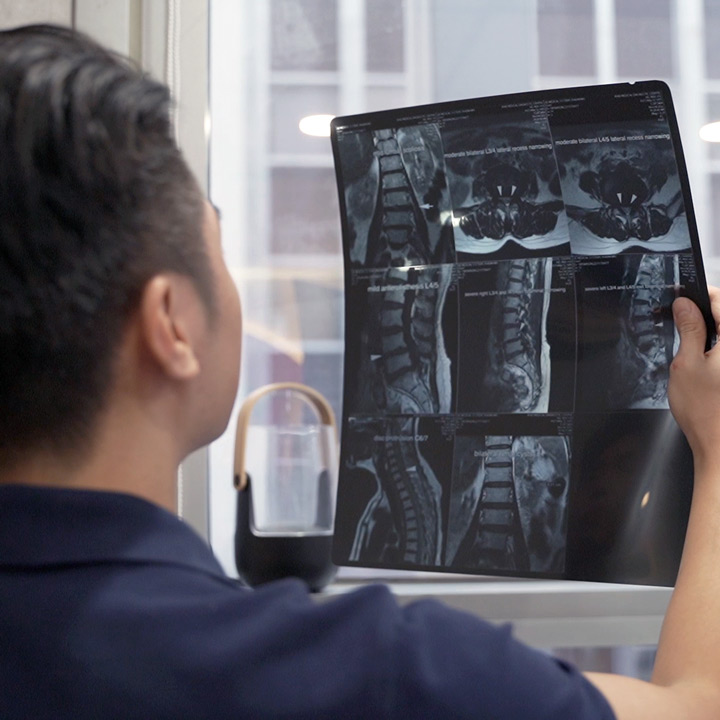
Lower back strain in tennis is typically due to repetitive rotation and extension movements involving the lumbar erector spinae, multifidus, and facet joints. This can result from serves or groundstrokes, especially in players with weak core or poor hip mobility. Symptoms include aching, tightness, or sharp pain in the lower back, sometimes radiating into the hips or glutes.
Strengthening Exercises:
Core stabilization (e.g., dead bugs, bird-dogs, planks)
Hip hinge drills (e.g., Romanian deadlifts)
Glute bridges and clamshells
Warm-Ups & Stretches:
Cat-cow and lumbar rotations
Hip flexor and hamstring stretches
Thoracic spine mobilization
Other Tips:
Prioritize good body mechanics when serving
Avoid hyperextending the lower back
Strengthen the hips to reduce lumbar compensation
How Physiotherapy Optimizes Tennis Performance
Physiotherapy is not just for injury recovery — it plays a vital role in boosting athletic performance.
Here’s how we help tennis players level up:
Correct muscle imbalances and movement faults
Improve joint mobility and soft tissue flexibility
Enhance proprioception, balance, and reaction time
Develop sport-specific strength and endurance
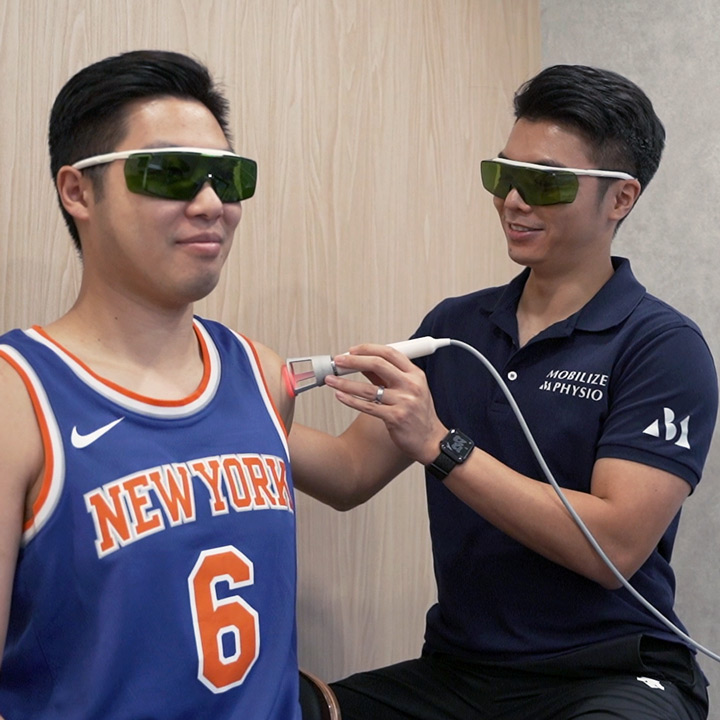
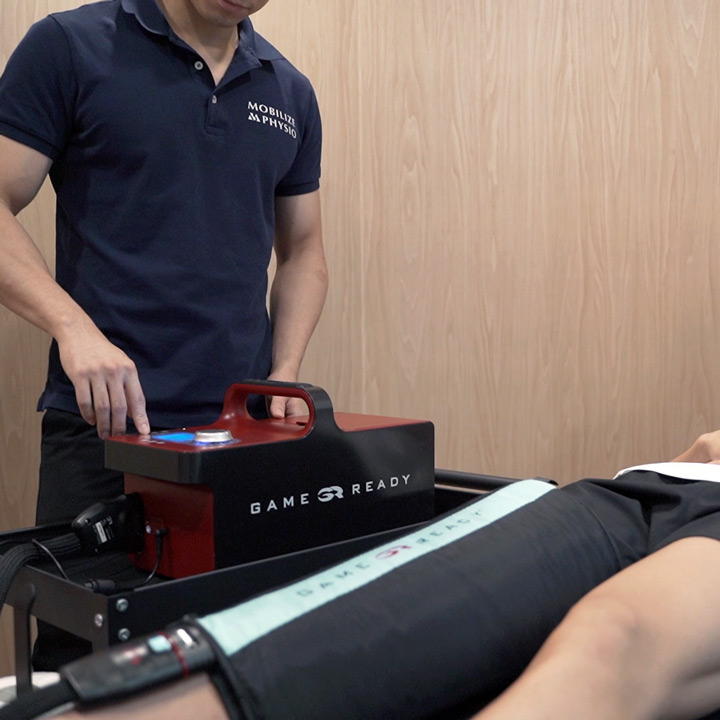
Provide manual therapy and recovery modalities like cupping, dry needling, or massage
Rehab & Return to Play
Already dealing with an injury? Our physiotherapists offer evidence-based rehab programs tailored to tennis players. We focus on:
Restoring pain-free range of motion
Progressive load management
Functional movement retraining (e.g., return-to-serve drills)
Re-injury prevention strategies
Tennis-Specific Education & Self-Care
We believe every tennis player should feel confident managing their body. That’s why we:
Educate on warm-up and cooldown routines
Guide racquet selection and grip technique
Offer training load advice to prevent overuse
Share recovery tools and at-home exercise plans
Don’t Let Injuries Bench Your Game
Tennis is a beautiful, demanding sport — but it doesn’t have to come with chronic pain or injuries. Whether you’re a weekend warrior or competitive player, physiotherapy can help you play stronger, smarter, and safer.
Physiotherapy Service
Mobilize Physio is a physiotherapy center located in Hong Kong. Our team of professional physiotherapists provides high-quality, evidence-based pain treatment. Our services include sports injury treatment, pain management, post-surgery rehabilitation, and posture and body alignment correction.
Every patient is unique, and we believe that every treatment plan should be customized accordingly. Therefore, we focus on one-on-one service to ensure that each patient receives personalized attention and specialized care. Contact us today to learn more about our physiotherapy services.
Latest Blog Posts
Conquering Morning Heel Pain in Hong Kong: The Deep Link Between Flat Feet & Plantar Fasciitis