
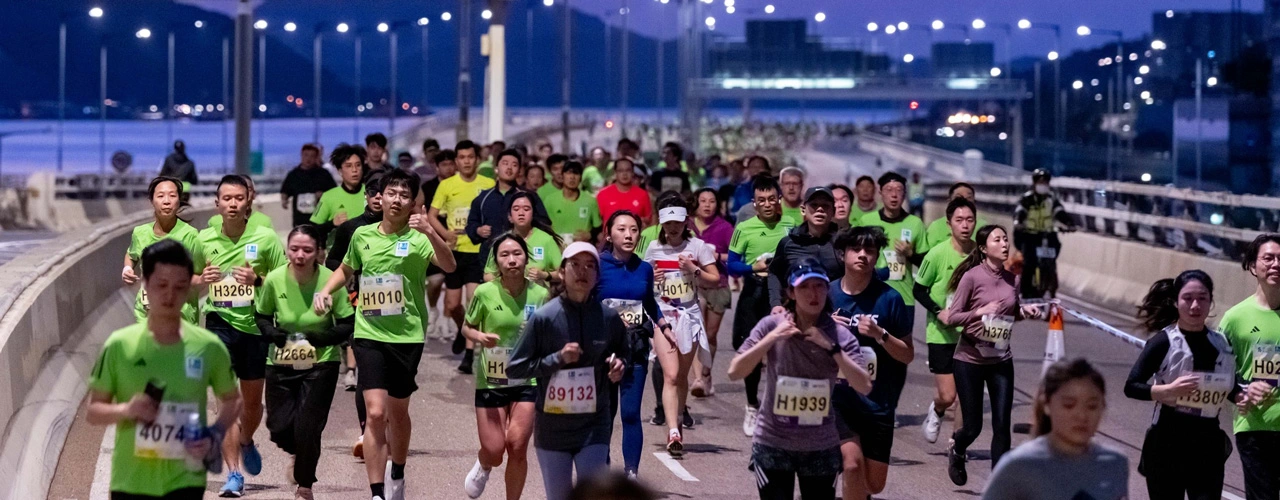
The excitement for the Standard Chartered Hong Kong Marathon is palpable, with runners across the city hitting their peak training mileage. While running is a fantastic way to build fitness and resilience, intense preparation can sometimes lead to overuse injuries. Research shows that at least 50% of regular runners get injured each year, with 80% of these injuries stemming from overuse. As you push towards your personal best, understanding common injuries and how to manage them is crucial for ensuring you make it to the start line healthy and strong. This guide provides an in-depth look at the most prevalent issues, empowering you with knowledge for self-management and clarity on when to seek professional physiotherapy in Hong Kong.
Table Of Content
Your Pain Decoder & Triage Guide
Before diving into specific injuries, use this framework to understand your pain and make smart decisions.
Think of injury as a simple equation: LOAD (running stress) exceeds your body’s current CAPACITY (tissue strength & resilience). Your job is to rebalance this.
- Monitor: Dull, generalized muscle soreness that warms up and disappears during your run. Your gait remains normal. Action: Train as planned, prioritize recovery.
- Modify: Localized pain (you can point to it with one finger) that is present but stable during a run—it doesn’t worsen. Action: Immediately reduce training load by 30-50%. Shorten your run, slow your pace, avoid aggravating terrain (like Hong Kong’s steep hills). Increase your prehab (strength & mobility work). This is your critical window for self-management.
- Stop & Seek Help: Sharp, stabbing, or pinching pain; pain that worsens during a run; pain that causes a limp or change in form; visible swelling. Action: Stop running. Cross-train instead. If pain persists after 3-5 days of rest/modification, consult a physiotherapist. Ignoring this can lead to a full-blown, season-ending injury.
The 24-Hour Rule: Pain that is worse the morning after a run is a clear sign the previous session was too much. Your next run should be easier or replaced with cross-training.
7 Common Running Injuries and Self-Management
Understanding the nature of these injuries is the first step toward effective prevention and recovery.
What it is: This condition involves pain around or behind the kneecap, caused by irritation of the cartilage as the kneecap rubs against the thigh bone. It is often triggered by repetitive stress, muscle imbalances, or improper running biomechanics, especially common during high-mileage marathon training on Hong Kong’s varied terrain.
- Symptoms:
- Dull, aching pain around or behind the kneecap.
- Pain that worsens when running, walking downstairs, squatting, or after prolonged sitting.
- A sensation of grinding or popping in the knee.
- Self-Management:
- Strengthen Hips & Core: Focus on exercises like clamshells, glute bridges, and planks to improve pelvic stability.
- Improve Flexibility: Regularly stretch quadriceps, hamstrings, and calves.
- Modify Activity: Reduce downhill running mileage, shorten your stride, and consider cross-training (e.g., swimming, cycling).
- Ice Application: Apply ice to the knee for 15-20 minutes after running to manage inflammation.
What it is: This is a degeneration and overload injury of the Achilles tendon, the thick band connecting your calf muscles to your heel bone. It is frequently caused by a rapid increase in training intensity, poor calf flexibility, or inappropriate footwear.
- Symptoms:
- Stiffness and pain in the tendon, especially first thing in the morning.
- Tenderness or thickening of the tendon.
- Pain that worsens at the start of a run and may ease during, then return afterward.
- Self-Management:
- Eccentric Heel Drops: The gold-standard exercise. Slowly lower your heels off a step to strengthen and remodel the tendon.
- Calf Stretching: Perform regular, gentle calf stretches with a straight and a bent knee.
- Load Management: Avoid sudden spikes in hill training or speed work.
- Footwear Check: Ensure your running shoes provide adequate heel support and are not excessively worn.
What it is: An overuse injury affecting the tendon connecting the kneecap (patella) to the shinbone. It involves collagen breakdown in the tendon due to repetitive high-load activities like running and jumping.
- Symptoms:
- Localised pain directly below the kneecap.
- Pain that is most severe when loading the bent knee (e.g., jumping, running, or descending stairs).
- Tenderness to touch at the base of the kneecap.
- Self-Management:
- Eccentric Squats: Perform slow, controlled single-leg squats on a slight decline (like a slanted board) to target tendon strength.
- Isometric Holds: Holding a small squat position can help manage pain in the early stages.
- Activity Modification: Reduce high-impact activities and volume during flare-ups.
- Gradual Loading: Follow a structured, progressive tendon-loading programme.
What it is: An overuse injury causing inflammation and pain on the outside of the knee, where the Iliotibial Band (a thick band of fascia from hip to shin) rubs over the thigh bone. It’s common in runners with weak hip stabilisers or tightness in the IT band.
- Symptoms:
- Sharp or burning pain on the outside of the knee, often starting at a predictable distance or time into a run.
- Pain that may worsen when running downhill or on banked surfaces.
- Possible tenderness and snapping sensation over the knee’s outer bone.
- Self-Management:
- Strengthen Hip Abductors: Target gluteus medius with exercises like side-lying leg raises and resisted band walks.
- Regular Stretching: Gently stretch the IT band, hamstrings, and glutes.
- Foam Rolling: Use a foam roller on the IT band, glutes, and thigh muscles.
- Analyse Running Form: Consider a gait analysis to check for excessive inward knee collapse.
What it is: Pain along the inner edge of the shinbone (tibia), resulting from inflammation of muscles, tendons, and bone tissue. It’s often seen in runners who increase mileage too quickly, have flat feet, or run on hard surfaces.
- Symptoms:
- Aching, tender pain along the inner side of the shin.
- Pain that is often worse at the beginning of a run and may subside during, only to return afterward.
- Possible mild swelling in the lower leg.
- Self-Management:
- Initial Rest & Ice: Reduce running volume, and ice the shins for 15 minutes several times a day.
- Strengthen Lower Legs: Perform toe raises (heel lifts) and exercises to strengthen the arch muscles.
- Footwear & Orthotics: Ensure proper arch support; consider over-the-counter orthotics if you have flat feet.
- Surface Modification: Temporarily switch to running on softer surfaces like grass or a track.
What it is: Pain along the inner edge of the shinbone (tibia), resulting from inflammation of muscles, tendons, and bone tissue. It’s often seen in runners who increase mileage too quickly, have flat feet, or run on hard surfaces.
- Symptoms:
- Aching, tender pain along the inner side of the shin.
- Pain that is often worse at the beginning of a run and may subside during, only to return afterward.
- Possible mild swelling in the lower leg.
- Self-Management:
- Initial Rest & Ice: Reduce running volume, and ice the shins for 15 minutes several times a day.
- Strengthen Lower Legs: Perform toe raises (heel lifts) and exercises to strengthen the arch muscles.
- Footwear & Orthotics: Ensure proper arch support; consider over-the-counter orthotics if you have flat feet.
- Surface Modification: Temporarily switch to running on softer surfaces like grass or a track.
What it is: A sudden, traumatic injury involving the overstretching or tearing of the ligaments that stabilise the ankle joint, typically on the outside (lateral side). It often occurs from landing on an uneven surface.
- Symptoms:
- Immediate pain, swelling, and bruising around the ankle.
- Difficulty bearing weight on the affected foot.
- Instability or a feeling of the ankle “giving way.”
- Self-Management (Acute Phase):
- Follow RICE: Rest, Ice (15-20 mins every 2-3 hours), Compression (with a bandage), Elevation.
- Regain Mobility: Once pain allows, gently write the alphabet with your toes to restore range of motion.
- Rebuild Strength & Balance: Progress to resisted band exercises and single-leg balance drills to prevent re-injury.
Taper & Race-Day Crisis Management
The final weeks and race day itself come with unique mental and physical challenges. Here’s your plan.
Managing Taper Twinges
The taper is infamous for phantom pains. As mileage drops, niggles can feel more pronounced. This is often due to reduced exercise-induced analgesia (the natural pain relief of running). Do not panic. Stick to your plan. Avoid the temptation to test yourself with a hard, short run.
The Race-Week Decision Framework:
- 5-7 Days Out: Any persistent or moderate pain should be treated aggressively with rest, cross-training, and physio. The goal is to reduce it to a manageable, low-level ache.
- 2-3 Days Out: Make your final shoe and gear choice—NOTHING NEW.
- The Night Before: Have a clear plan A, B, and C.
- Plan A (All Systems Go): Execute your original race strategy. This is for when you have no concerning pain.
- Plan B (Adjust and Adapt): Adjust from the start. Adopt a conservative pace and a pre-emptive run/walk strategy (e.g., run 9 min / walk 1 min). Your goal shifts from a time target to healthy completion. Use this plan for low-level, stable aches.
- Plan C (The Smart Stop): Make the courageous, long-term decision to DNS (Did Not Start). This is for sharp pain, pain that worsens with walking, or any significant swelling. Protecting your body for future seasons is the mark of a smart athlete.
In-Race Pain Flare-Up Protocol
If a known issue flares up during the marathon:
- Shorten Your Stride: Immediately reduce your stride length by 20%. This lowers impact forces.
- Walk the Aid Stations: Take longer walk breaks through every water station.
- Mental Check: Focus on form cues related to the injury (e.g., for ITBS: “engage glutes”; for knee pain: “soft knees”).
- Know the Red Flag: If pain becomes sharp, stabbing, or causes a significant limp, stop at the next medical tent. Finishing is not worth a long-term setback.
Why Early Professional Intervention is Key for Marathon Runners
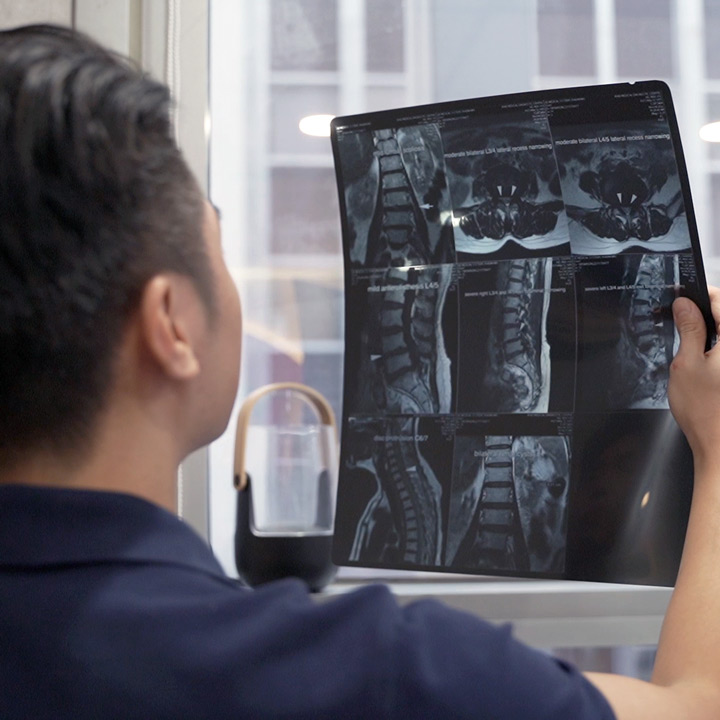
While self-management is valuable for early-stage niggles, persistent pain is a clear signal to seek help. Ignoring symptoms can lead to chronic issues, altered movement patterns, and more severe injuries like stress fractures, which could completely derail your marathon goals. A Hong Kong physiotherapist can provide an accurate diagnosis, address the root cause (like biomechanical flaws or muscle weaknesses), and create a tailored rehabilitation plan that keeps your training on track safely.
How Physiotherapy Gets You to the Finish Line
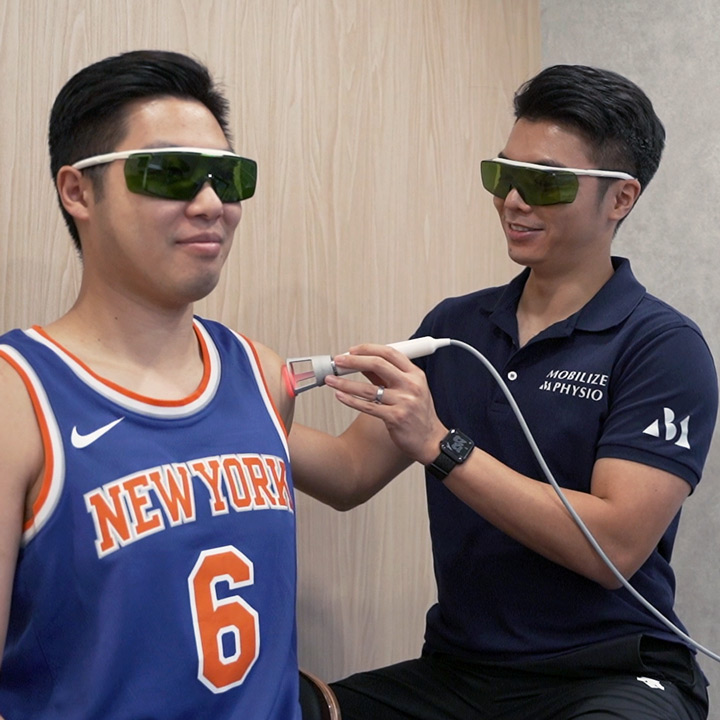
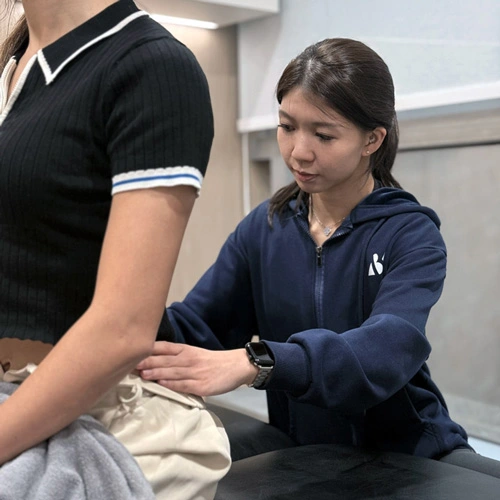
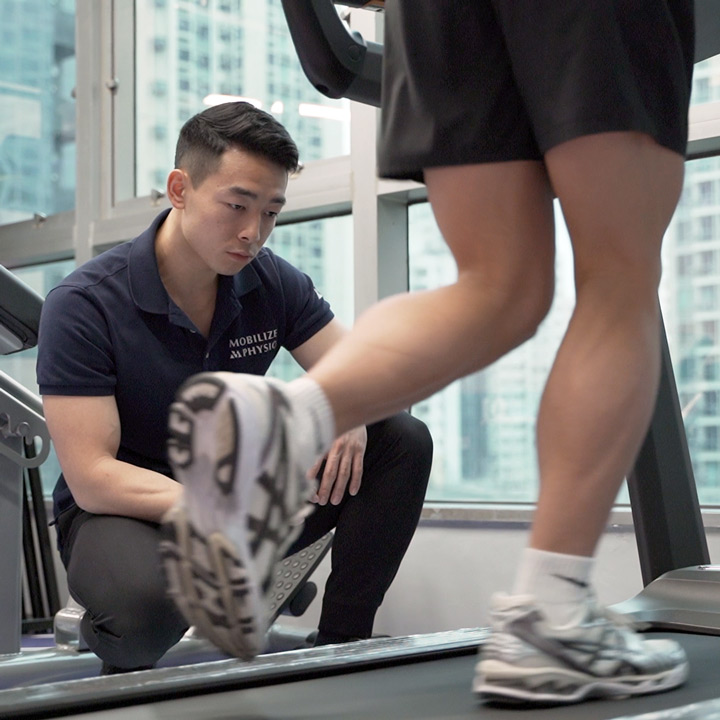
At our Hong Kong clinic, our sports physiotherapy service is designed for runners. We combine manual therapy, evidence-based exercise prescription, and running-specific gait analysis to not only treat your injury but also enhance your performance. We help you build resilience, correct imbalances, and develop smarter training habits, ensuring you arrive at the Standard Chartered Marathon start line confident, strong, and ready to achieve your personal best.
Train Smart, Recover Well, Run Strong
Your marathon journey is a testament to your dedication. By listening to your body and acting proactively at the first sign of trouble, you invest in your long-term running health. Use this guide to navigate common hurdles, and remember: consulting a professional is a sign of a smart athlete, not a weak one.



Physiotherapy Service
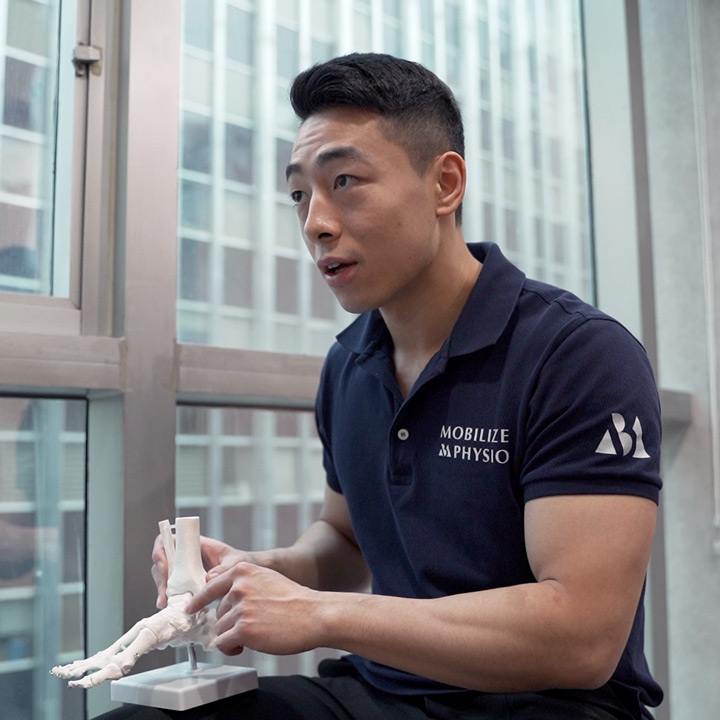
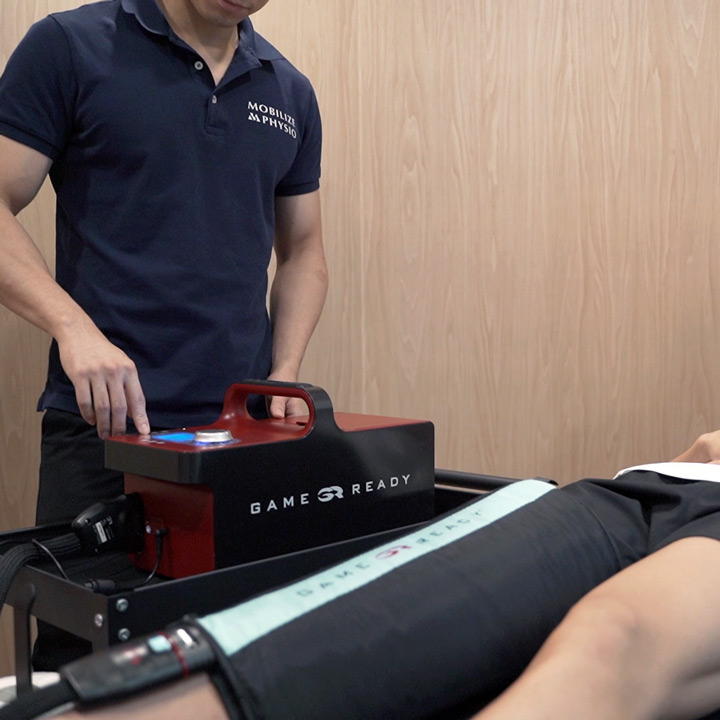
Mobilize Physio is a physiotherapy center located in Hong Kong. Our team of professional physiotherapists provides high-quality, evidence-based pain treatment. Our services include sports injury treatment, pain management, post-surgery rehabilitation, and posture and body alignment correction.
Every patient is unique, and we believe that every treatment plan should be customized accordingly. Therefore, we focus on one-on-one service to ensure that each patient receives personalized attention and specialized care. Contact us today to learn more about our physiotherapy services.
Latest Blog Posts

5 Exercises to Strengthen Your Hidden Core | The Gold Standard: Why Physiotherapy is the First Line of Defence for Women’s Pelvic Health

Say Goodbye to the “Slouch”: A Guide to Understanding and Fixing Rounded Shoulders
The Road to Recovery: Understanding Whiplash and Early Intervention
The Science of Precision Recovery: How Force Plate Technology is Transforming Physiotherapy

Waking Up Dizzy? Understanding BPPV vs. Cervicogenic Dizziness: A Comprehensive Guide to Diagnosis and Recovery

How to Heal a Sprained Ankle: 4 Best Rehab Exercises to Prevent Re-injury